
Last updated October 30, 2026
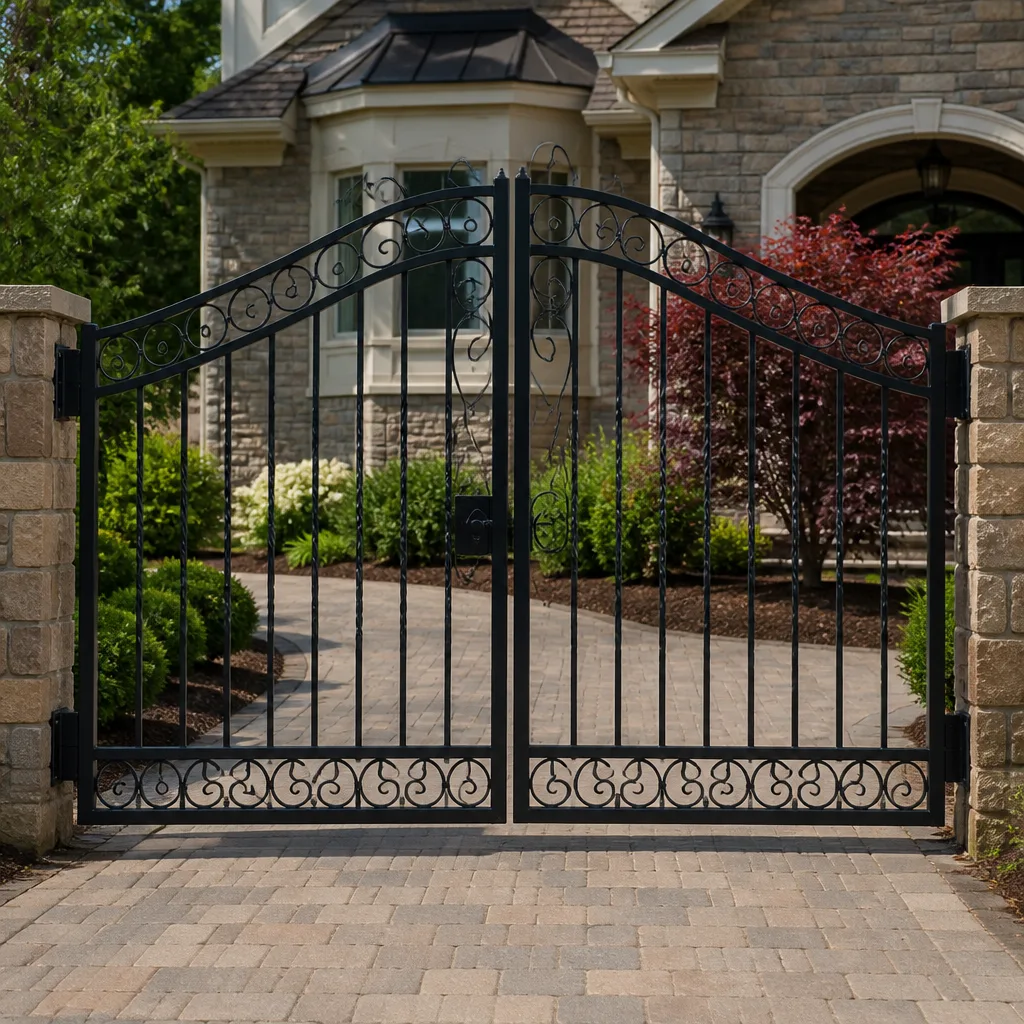 Wrought iron
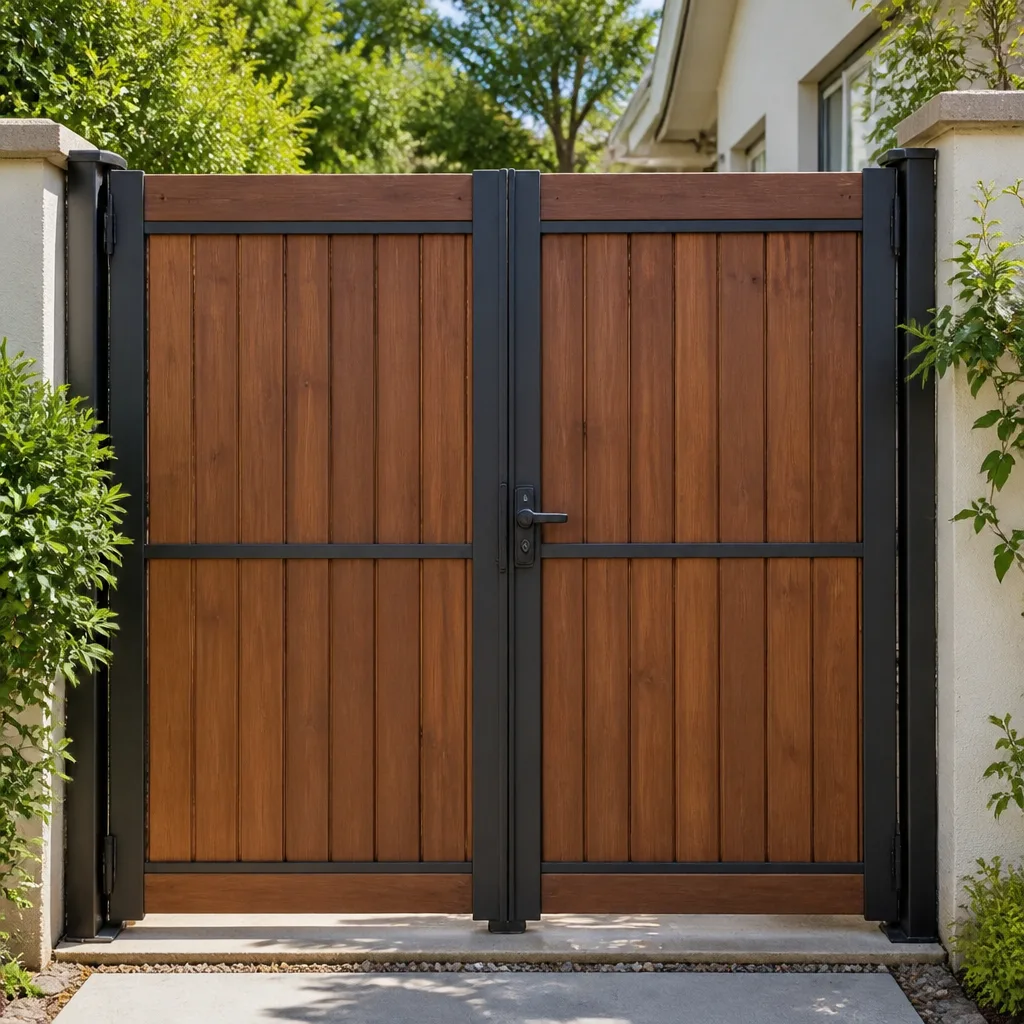 Wood & steel frame
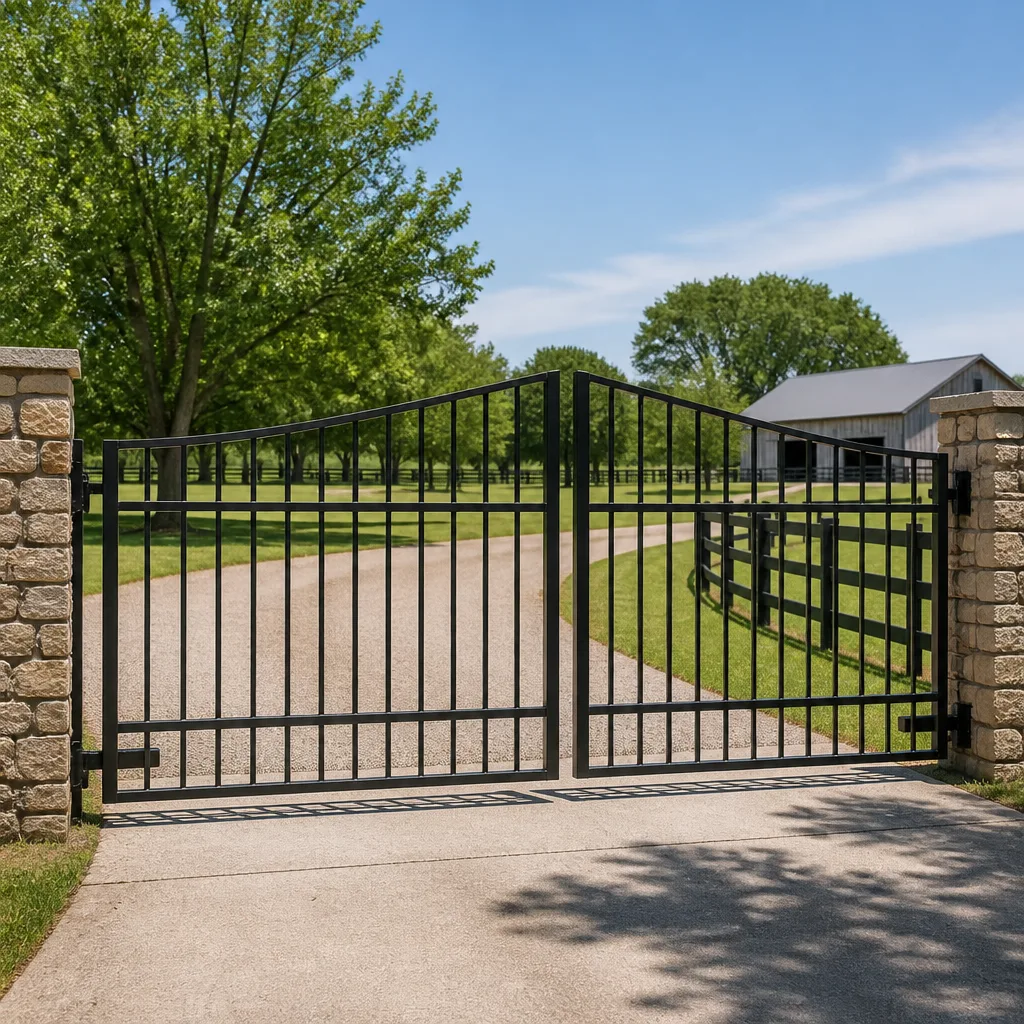 Farm & ranch
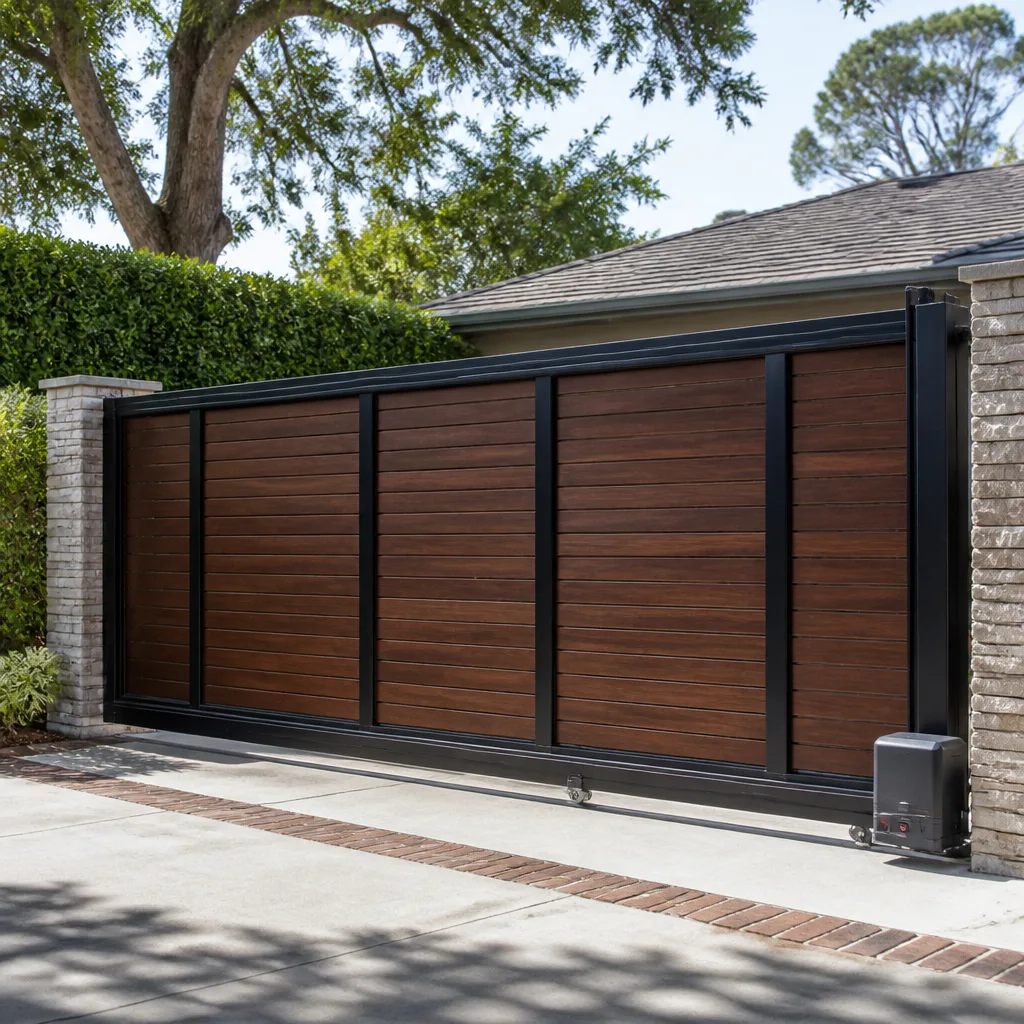 Sliding driveway gates
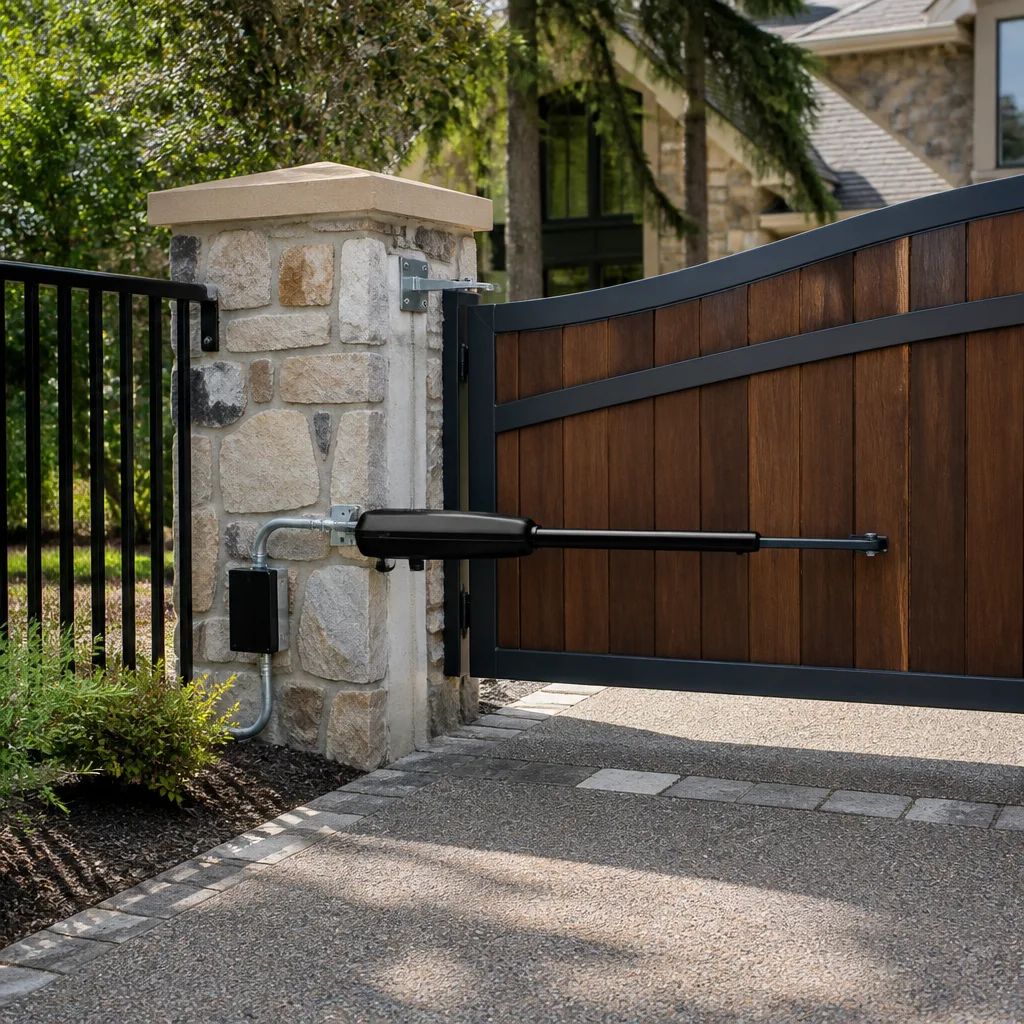 LiftMaster operators
Free on-site gate assessment - hinges, posts, and your LiftMaster or Nice gate operator checked before anything is quoted
The assessment is free and the quote is the invoice.
Get your free estimateThe Complete Gate Repair Guide for Ontario Homeowners
Here’s something most Ontario homeowners don’t realize until they’re standing in the driveway at 6:45 a.m. with a gate that won’t open: the opener motor isn’t usually the problem. After years of gate-specific repair work across Ontario, we’ve found the mechanical gate itself causes the majority of failures. The opener gets blamed because it’s the part with flashing lights and a circuit board. But the real culprit is usually the hardware it’s attached to. This guide walks through what actually breaks, why it breaks, and how to fix it right the first time, or explore The Complete Guide to Gate Repair in Ontario for deeper coverage.
Quick Answer
Gate repair in Ontario typically costs between $85 and $450 for common mechanical issues, while electric gate repair involving control boards or motors runs $250 to $1,500 depending on the operator brand and failure type. Most mechanical repairs can be completed in a single visit, while electrical diagnostics on brand-specific systems like LiftMaster or FAAC operators may require component ordering. We provide free estimates for any our Gate Repair services in Ontario and will quote a firm price before any work starts.
Styles & brands we work with
Table of Contents
- How Gates Actually Fail: The Three Maintenance Gaps
- The Diagnostic Sequence We Run Before Touching Any Component
- Why Ontario Soil Shifting and Caliche Hardpan Wreck Gate Posts
- Which Gate Repairs Are DIY-Viable and Which Void Warranties
- Brand-by-Brand Repair Notes: LiftMaster, Mighty Mule, and Viking
- How to Read a Gate Repair Quote Line by Line
- Common Mistakes to Avoid
- When to Call a Professional
- Frequently Asked Questions
How Gates Actually Fail: The Three Maintenance Gaps
Most gate failures don’t come out of nowhere. They build quietly for months, sometimes years, until a minor issue turns into a driveway-blocking breakdown. In our experience working on gates throughout Ontario, the overwhelming majority of repairs trace back to three specific maintenance gaps that homeowners rarely think about.
Gap one: hardware loosening from vibration and temperature swings. Ontario sees summer highs above 100 degrees and winter nights that dip into the 30s. That thermal cycling expands and contracts metal. A gate that swings or slides multiple times per day experiences thousands of micro-vibrations through its hinges, bolts, and track hardware. Over a year or two, those bolts loosen. A loose hinge puts uneven load on the gate frame, which puts strain on the opener motor. By the time a homeowner notices the gate dragging or the motor laboring, the root cause has been present for months.
Gap two: lubrication neglect on moving joints. Gate hinges, roller bearings, and chain drives are wear surfaces. Without periodic lubrication, they develop friction. Friction means the motor works harder to move the same gate. The motor doesn’t fail first, the hinges do. But if left long enough, the motor burns out fighting the resistance. This is the classic scenario where a homeowner replaces a perfectly serviceable opener because a $4 hinge was never greased.
Gap three: ignoring early warning signs. A gate that hesitates for two seconds before moving. A slight scraping sound on the track. A gate that opens but won’t fully close. These are diagnostic information, not quirks. Every one of these symptoms tells a technician something specific about what’s degrading. Homeowners who call us at the first sign of hesitation in their Ontario gate repair issues typically pay for a hinge adjustment or sensor realignment. Those who wait until the gate won’t move at all pay for a motor replacement or control board swap.
The Diagnostic Sequence We Run Before Touching Any Component
Specialists don’t guess. We run a specific order of operations because replacing parts in the wrong sequence creates false fixes. Here’s the diagnostic sequence in the exact order it should be performed on any gate failure in Ontario:
- Load test on the gate itself. Disconnect the opener and manually move the gate through its full travel. A gate that moves freely by hand but strains the motor points to the opener. A gate that’s hard to move by hand points to the gate itself. This single test eliminates 50% of the diagnostic uncertainty in under two minutes.
- Alignment check on posts and hinges. Use a level on gate posts, check hinge pins for wear, and look for visible sag at the latch end. In Ontario, this step catches post movement from soil shifting before it destroys a hinge or bends a track.
- Hardware inspection. Check every bolt, bracket, roller, and weld point. Loose hardware gets tightened to manufacturer torque specs. Worn hardware gets identified and quoted. Missing hardware gets flagged because it changes the load path through the gate structure.
- Electrical testing on the opener. Only after the mechanical side checks out clean. Test incoming power, check for blown fuses, test transformer output, and verify control board status lights. This order matters because a low-voltage electrical issue can mimic a mechanical failure, but treating the electrical first often masks the actual mechanical problem.
- Safety device verification. Photo eyes, safety edges, and loop detectors. These fail in specific ways, often due to sun exposure in Ontario or critters chewing wiring. A failed safety device won’t usually stop the gate from moving, but it will stop it from closing or cause intermittent reversal behavior.
This sequence catches compound failures, which are common. A gate with a slightly bent track and a failing capacitor isn’t fixed by replacing just one or the other. The load test plus alignment check reveals the full picture before we touch any component.
Why Ontario Soil Shifting and Caliche Hardpan Wreck Gate Posts
If you’ve lived in Ontario for any length of time, you know the ground isn’t stable. The city sits on soils that move with moisture changes. Summers dry everything out. Winter rains saturate the ground. That cycle causes vertical movement, especially in areas with expansive clay content. For a gate post set in concrete, that movement matters.
The bigger issue is caliche hardpan. Caliche is a calcium carbonate layer that forms naturally in arid and semi-arid regions like the Inland Empire. It ranges from crumbly to nearly concrete-hard, and it sits at varying depths below the surface. When fence and gate contractors set posts without drilling through the caliche, the post sits in a shallow concrete footing that’s effectively floating above an impenetrable layer. The first time soil shifts beneath it, the post leans.
A leaning gate post cascades into everything downstream:
- The gate sags at the latch end, so the latch no longer aligns with the receiver.
- The opener arm pulls at an incorrect angle, creating side-load on the motor bearings and gears.
- Hinge pins wear unevenly because the gate weight distribution changed.
- The gate eventually drags on the ground or binds against the frame, tripping the opener’s force limit and causing reversal.
We see this pattern regularly in Ontario, particularly in neighborhoods with older single-swing gates where the original post footings were poured shallow. The motor isn’t failing because it’s a bad motor. It’s failing because it’s been fighting a misaligned gate for two years. This is the single most common root cause we diagnose on electric gate repairs in the area. If your gate is dragging or your electric gate repair keeps showing force-limit errors, the post alignment is the first thing to check, not the control board.
Proper post repair in Ontario means exposing the old footing, drilling through the caliche layer when present, and setting a new post deep enough to resist soil movement. It’s more involved than a simple re-set, but it’s the difference between a repair that lasts fifteen years and one that fails again in fourteen months.
Which Gate Repairs Are DIY-Viable and Which Void Warranties
We get asked constantly whether homeowners can handle gate repairs themselves. The honest answer splits into two categories. Some things make sense for a capable DIYer. Some things will genuinely cost more to fix after a DIY attempt goes wrong than they would have cost to repair correctly the first time.
DIY-viable repairs include:
- Cleaning and lubricating hinges, rollers, and track hardware.
- Tightening loose bolts and brackets using basic hand tools.
- Cleaning photo eye lenses and removing debris from the track.
- Replacing batteries in remote controls and keypad entry units.
- Clearing vegetation growth around the gate swing path.
These are maintenance-level items. They involve no electrical work, no structural modification, and no safety device recalibration. If the repair goes wrong, the worst case is a still-squeaky gate.
Repairs you should not attempt yourself include:
- Any control board, capacitor, or transformer replacement on an electric opener.
- Any repair involving the gate’s safety devices, including photo eyes, safety edges, and loop detectors.
- Replacing or re-tensioning torsion springs on cantilever gates.
- Post removal or re-setting, especially in Ontario soils with caliche.
- Any repair that requires a gate to be welded or structurally modified.
The line is not arbitrary. The electrical components on modern gate operators carry manufacturer warranties that are voided by unauthorized service. LiftMaster, FAAC, and BFT all state in their documentation that opening the control panel or altering wiring without factory or dealer authorization voids the warranty on that component. That’s not a scare tactic. It’s a contractual reality, and it means a $40 DIY control board attempt can turn a warrantied $600 repair into a non-warrantied $800 repair.
Safety devices are a separate issue. Gate openers are governed by UL 325 safety standards, which exist because automatic gates can and do cause serious injuries when safety devices fail or are bypassed. A photo eye that’s misaligned won’t detect a person in the gate’s path. A safety edge that’s wired incorrectly won’t reverse the gate on contact. These aren’t components you learn to service from a YouTube video, and the liability of an incorrectly repaired safety device sits with the property owner. For anything involving electricity, safety devices, or structural integrity, call a specialist. For anything else, a careful homeowner with basic tools is fine.
Brand-by-Brand Repair Notes: LiftMaster, Mighty Mule, and Viking
Different manufacturers build their operators with different failure points. Knowing the brand tells a specialist where to look first. Here’s what we typically find with the three brands most common on Ontario residential gates.
LiftMaster: LiftMaster operators are workhorses, and their swing and slide gate models are widely installed across Ontario residential properties. The most common failure pattern we see on LiftMaster gate operators is capacitor degradation and limit switch drift. The capacitors age out, especially in heat, and the gate starts behaving erratically, sometimes reversing mid-cycle or failing to start. Limit switches also drift over time, which causes the gate to stop short of full open or full close. Both are repaired with factory components, and on most LiftMaster residential models, the repair is a same-visit job if the part is in stock. The other LiftMaster-specific issue we see is the plastic drive gear inside smaller residential swing arm operators. It’s designed as a sacrificial component, and in the Ontario heat it eventually strips. That’s a straightforward replacement, not a full opener swap.
Mighty Mule: Mighty Mule systems are extremely common because they’re sold direct to homeowners at retail. The most frequent repair issue with Mighty Mule operators is the control board, specifically the relay that drives the motor. Heat exposure and power fluctuations, both facts of life in Ontario, shorten the relay’s life. The second common issue is the actuator arm itself on swing gate models. The internal limit switches in the Mighty Mule actuator fail gradually, causing intermittent stopping behavior that looks like a motor problem but is actually a limit switch problem. Mighty Mule parts are widely available, and a qualified technician can replace the actuator or control board without replacing the entire system.
Viking: Viking is the commercial-grade brand, and we see these on larger residential estates and commercial properties across the Inland Empire. Viking operators are built for heavy gates, and their failure points reflect that. The most common Viking issue we diagnose is loop detector failure or misconfiguration. Viking systems typically use vehicle detection loops cut into the driveway, and when those loops fail due to cracked pavement or damaged wiring, the gate won’t auto-close or won’t hold open correctly. The second common issue is the hydraulic pump on Viking hydraulic swing operators. Those pumps need periodic fluid level checks, and when the fluid is low or contaminated, the gate moves sluggishly. Viking repairs are more involved than residential brands, and parts are ordered through commercial distribution channels, which means a slightly longer lead time on some components.
If you have a Mighty Mule actuator that’s making a grinding noise or a LiftMaster opener that resets randomly, you don’t need a new system. You need the specific component replaced by someone who knows the brand. That brand fluency is why we stock parts across multiple operators and diagnose on-site rather than guessing over the phone.
How to Read a Gate Repair Quote Line by Line
Nobody likes surprises on an invoice, and gate repair quotes are where homeowners get taken advantage of when they don’t know what to look for. Here’s how to evaluate a repair quote for any gate installation or repair scope in Ontario:
- Look for a diagnostic fee vs. a diagnostic credit. Some companies charge a diagnostic fee that’s separate from the repair cost. Others roll the diagnostic into the repair if you approve the work. A diagnostic fee is normal. A diagnostic fee that doesn’t get credited toward the repair when you approve the work is how you pay twice for the same technician visit.
- Check that parts are line-itemed. A quote that says “complete gate repair – $1,200” tells you nothing. A legitimate quote lists the specific component: “LiftMaster K74-30768 control board – $385” or “Viking loop detector – $220.” If the parts aren’t identified by part number or at minimum by specific component name, ask for the breakdown.
- Confirm hourly labor vs. flat-rate pricing. Some repairs are quoted flat-rate, some are time-and-materials. Both are legitimate, but flat-rate pricing is what you want for defined repairs like a board swap or actuator replacement. You know the price before the work starts. Time-and-materials makes sense for diagnostic-heavy jobs where the scope is genuinely unknown.
- Watch for replacement upselling on repairable components. This is the big one. A failed control board on a five-year-old Viking operator does not mean you need a new Viking operator. A worn actuator on a Mighty Mule swing gate does not mean you need a new gate. If the quote includes a full system replacement and the original system is less than ten years old, ask why the specific component can’t be replaced. Sometimes replacement genuinely makes sense. A specialist will explain why. A generalist will just add it to the quote.
- Check the warranty terms on repaired parts. A repair warranty should cover both the part and the labor for a reasonable period. If a quote offers a part warranty but no labor warranty, and the part fails in 60 days, you still pay labor on the replacement. Ask for the term specifically.
Before any work starts, the price on paper should be the price you pay. We quote firm pricing on all gate repairs in Ontario, and the number agreed is the number invoiced. If a quote changes mid-repair because the technician “found something else,” that’s a sign the diagnostic sequence wasn’t run properly in the first place.
Common Mistakes to Avoid
- Replacing the opener because the gate drags. If you don’t fix the mechanical drag first, the new opener inherits the same load and fails the same way. In Ontario, this usually means the gate post has moved in the soil. An opener replacement without a post fix is a second repair waiting to happen.
- Lubricating with the wrong product. WD-40 is a solvent, not a lubricant. It cleans, then evaporates. Gate hinges and rollers need a heavy grease or lithium-based lubricant that stays in place. Using the wrong product accelerates wear instead of slowing it.
- Ignoring safety device error codes by bypassing them. Bypassing a photo eye or safety edge because the gate keeps false-triggering is a temporary convenience with permanent liability. In Ontario, the sun angle at certain times of day causes false photo eye trips. The fix is shade positioning or re-aiming, not bypassing the sensor.
- Attempting post re-set without understanding the soil. Setting a gate post in existing soil that already failed once, without going deeper or addressing caliche, simply reproduces the original problem. The post will lean again within a year or two.
- Waiting for total failure before calling. A gate that hesitates, scrapes, or reverses intermittently is sending diagnostic information. Every week that passes without acting increases the repair scope and the cost. The cheapest repair is the one you catch early.
- Hiring a generalist to save money. A general contractor or handyman who “can probably figure it out” spends the first two hours learning what a gate specialist already knows. That learning time is billed to you, and the repair still may not be right. Ontario has gate specialists who can diagnose in minutes, not hours.
When to Call a Professional
Call a professional when the gate is powered, when safety devices are involved, when the post has moved, when the gate is binding against the frame, or when any repair involves the control board, motor, or wiring. These are not areas where trial-and-error makes financial sense. The liability exposure from a malfunctioning gate is real, and the cost of a professional repair is almost always less than the cost of a failed DIY attempt followed by a professional repair of both the original problem and the new damage. Ontario Gate Company offers free estimates for any gate repair in Ontario, including electric operator systems. Call (855) 707-3634 to schedule an on-site evaluation.
Frequently Asked Questions
Mechanical gate repairs in Ontario typically run $85 to $450, while electric gate repairs involving control boards, capacitors, or motors range from $250 to $1,500 depending on the operator brand and part cost. Common repairs like hinge replacement, track realignment, and sensor cleaning fall at the lower end. Brand-specific failures like a LiftMaster control board or a Viking loop detector run higher because the components themselves cost more. Call (855) 707-3634 for a free estimate with firm pricing before any work starts.
Most mechanical gate repairs are same-day jobs because the parts, hinges, brackets, rollers, and track hardware are standard components we keep stocked on our trucks. Electric repairs involving brand-specific parts sometimes require a second visit if the component isn’t locally available, especially for commercial Viking or FAAC operators where parts come through distribution channels. When we diagnose on-site, we’ll tell you the realistic timeline before any quote is approved.
A gate that reverses during closing is almost always tripping its force limit or a safety device. The force limit trips when the gate encounters physical resistance, which usually means the gate is dragging on the ground, binding on the frame, or the track is obstructed. The safety device trips when the photo eye is misaligned, dirty, or getting blasted by direct Ontario sun. We check the mechanical load first, then the safety devices, because fixing the drag often resolves the reversal without touching the electronics.
Most of the time, you need new hardware. Gates are built to last decades. Hinges, rollers, track sections, and opener components are designed to be replaced. The cases where a gate itself needs replacement are structural, like a cracked weld at a critical stress point or rot in a wooden gate frame. If a quote recommends full replacement, ask specifically what structural failure makes repair impossible.
A gate that opens fine but refuses to close is telling you that a safety device is blocking the close cycle. The most likely culprit is a photo eye that’s misaligned or obstructed, or a loop detector that’s going bad and reading a phantom vehicle on the inside. It’s rarely the motor or control board. Check for obvious obstructions first, then call for an on-site safety device diagnostic if the problem persists.
We service all major gate and operator brands you’ll find on Ontario properties, including LiftMaster, Mighty Mule, FAAC, BFT, Viking, Ghost Controls, DoorKing, and Elite. If your gate uses a different brand, call us anyway. The diagnostic process is the same regardless of brand, and we can source parts for most systems on the market. Call (855) 707-3634 and we’ll tell you up front whether we can help.
The Bottom Line
Most gate failures in Ontario are predictable and preventable. The gate itself fails before the opener does, usually because post movement, neglected hardware, or lack of lubrication created conditions the motor could not survive. The repair sequence matters: load test, alignment check, hardware inspection, then electrical diagnostics. Skip it and you’ll replace the wrong component. Finally, know which repairs are sensible to tackle yourself and which ones require a specialist, especially where warranties and safety devices are concerned. For more guides & resources, visit our blog, or if your gate is acting up anywhere in Ontario, call (855) 707-3634 for a free estimate. We’ll diagnose it on-site and tell you exactly what’s wrong before quoting a single dollar.
Written by the team at Ontario Gate Company home, serving Ontario since 2011.
See the difference
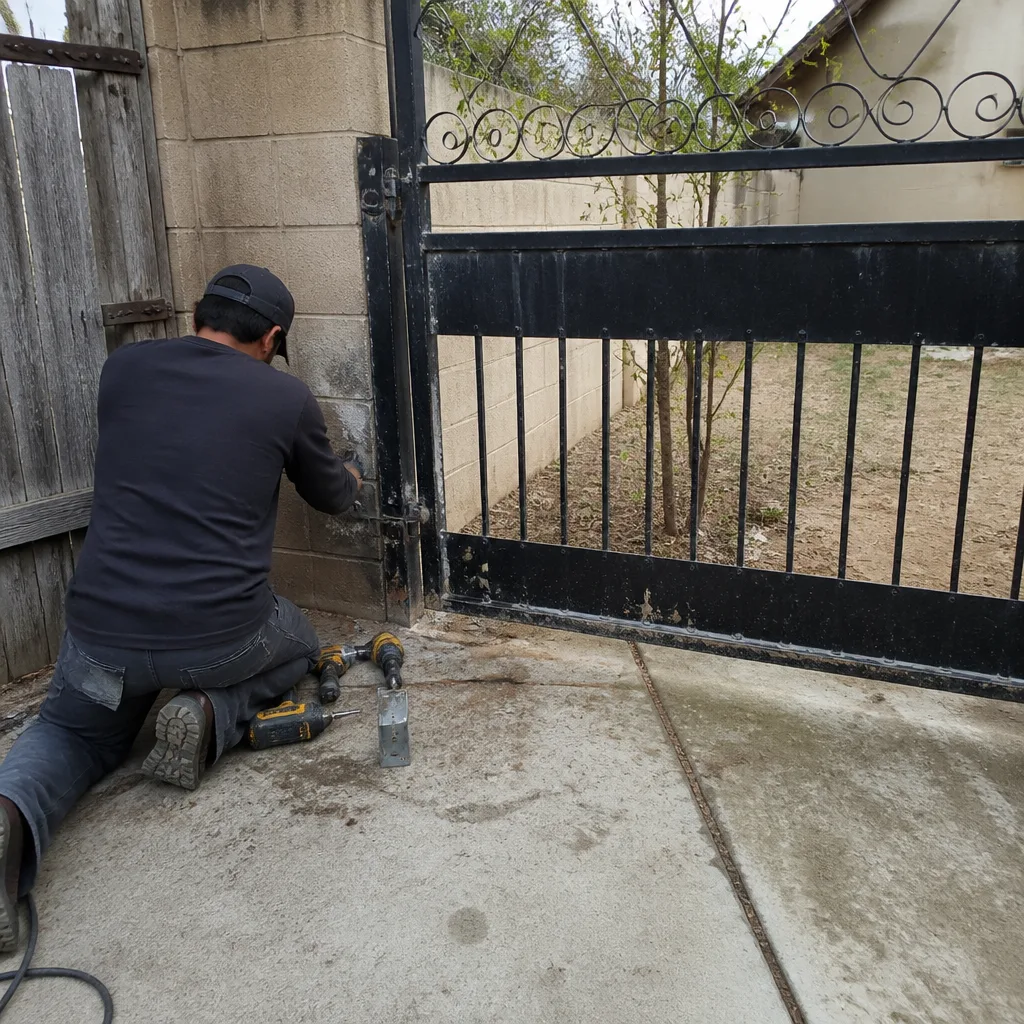 Before
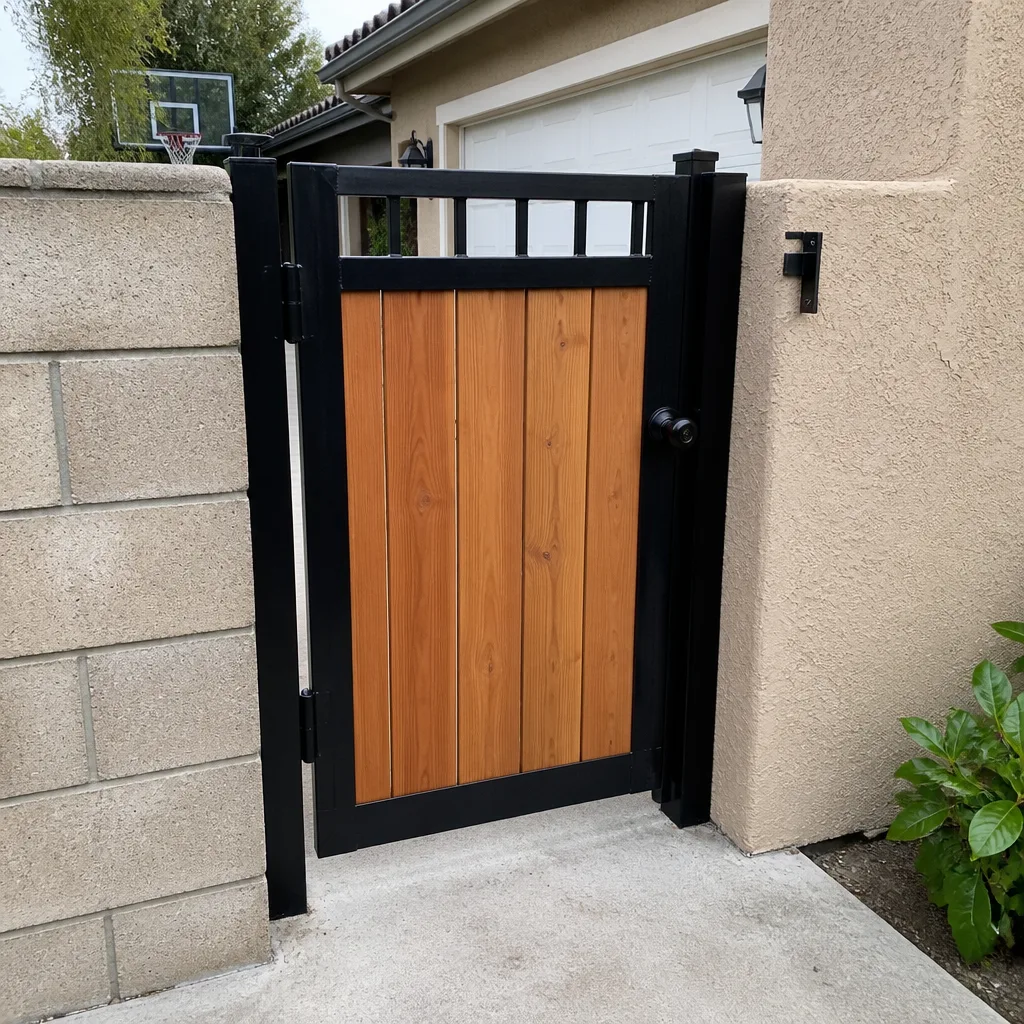 After
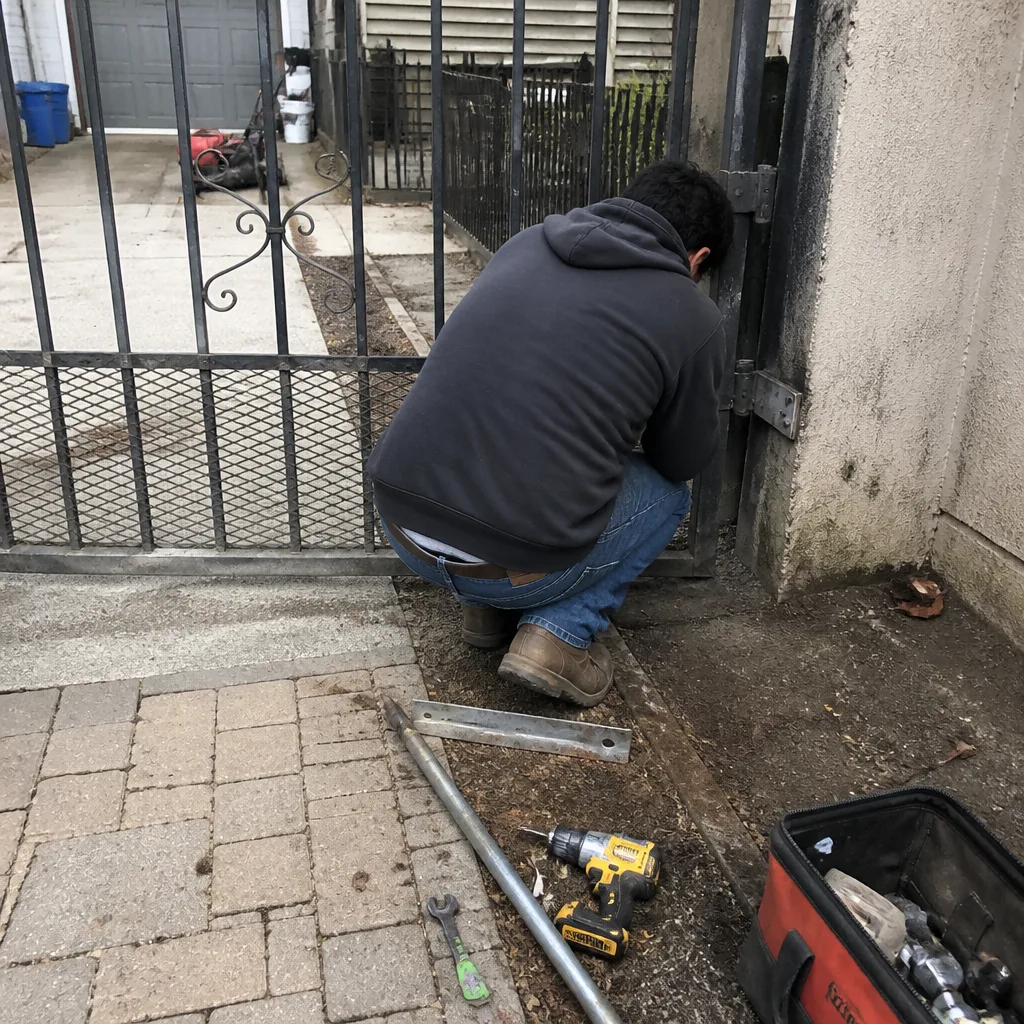 Before
 After
 Before
 After