
Last updated October 30, 2026
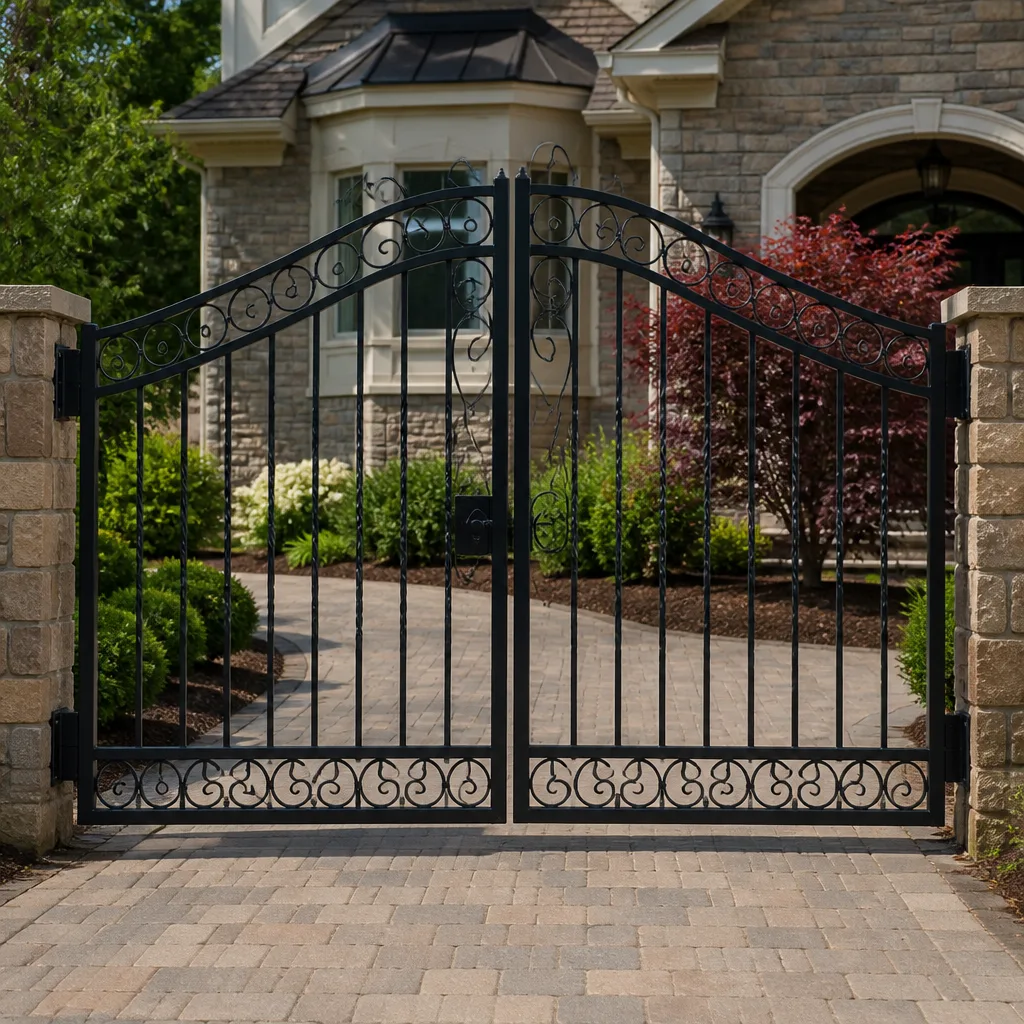 Wrought iron
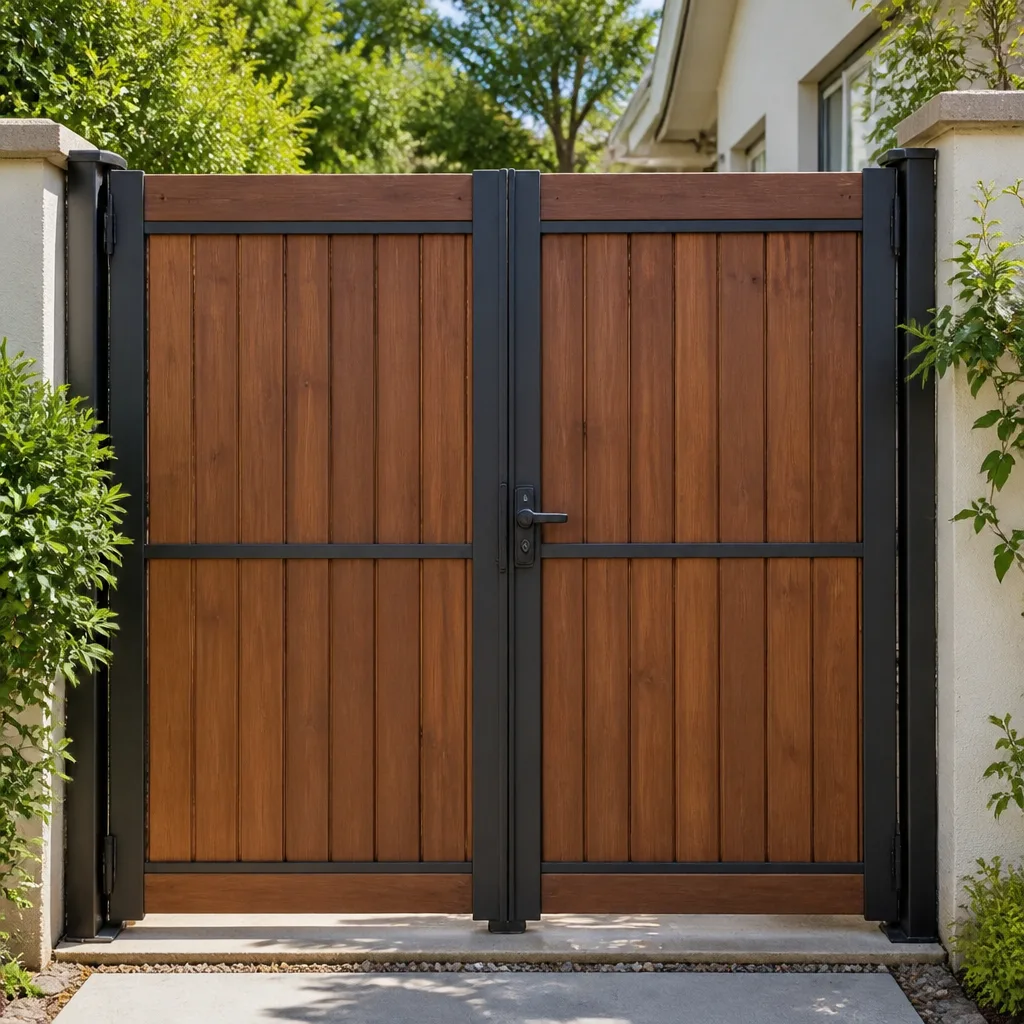 Wood & steel frame
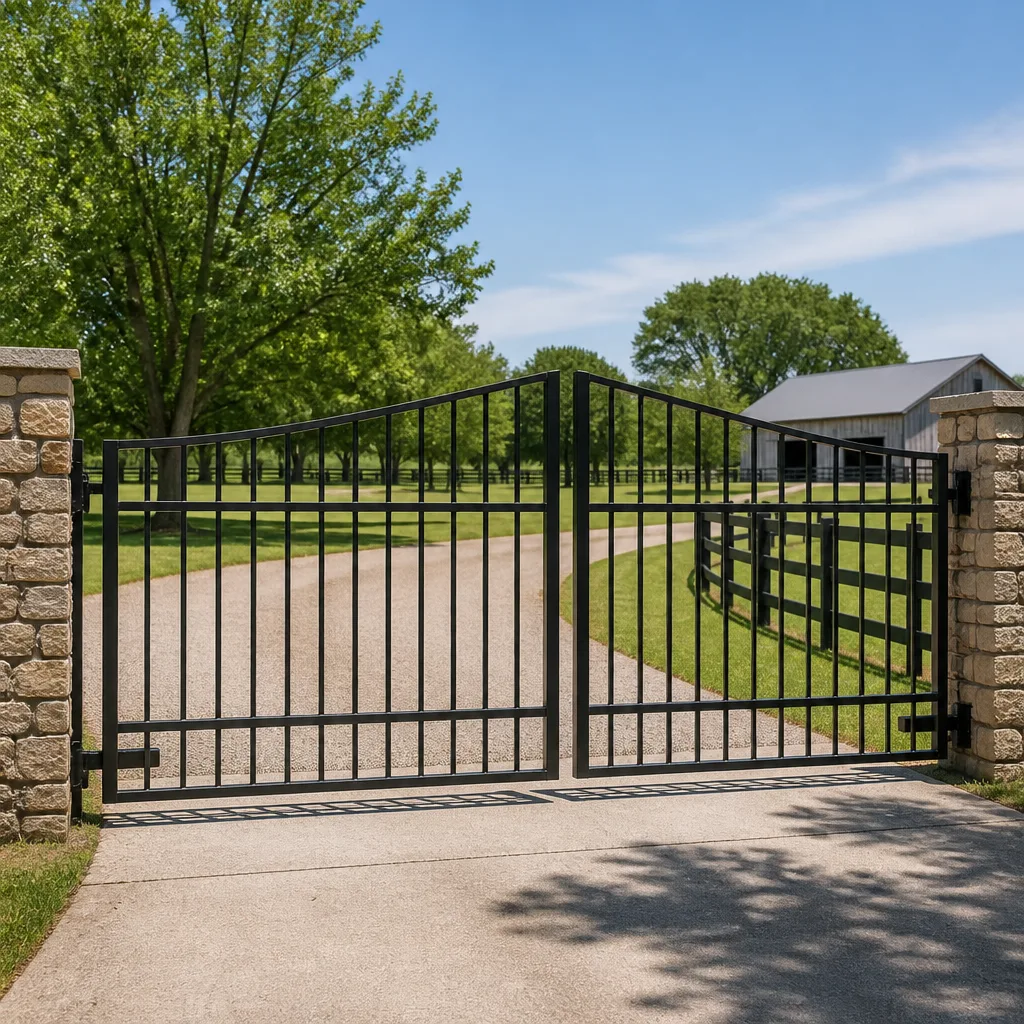 Farm & ranch
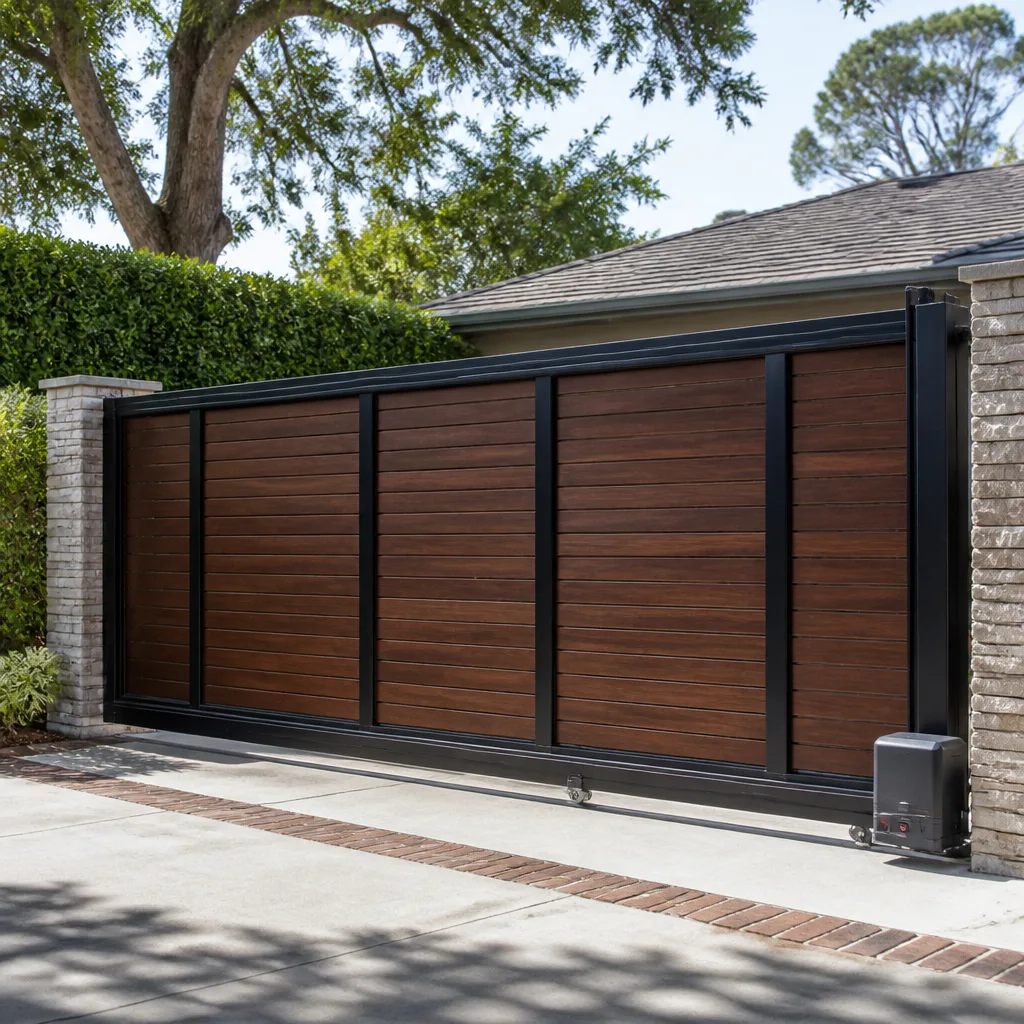 Sliding driveway gates
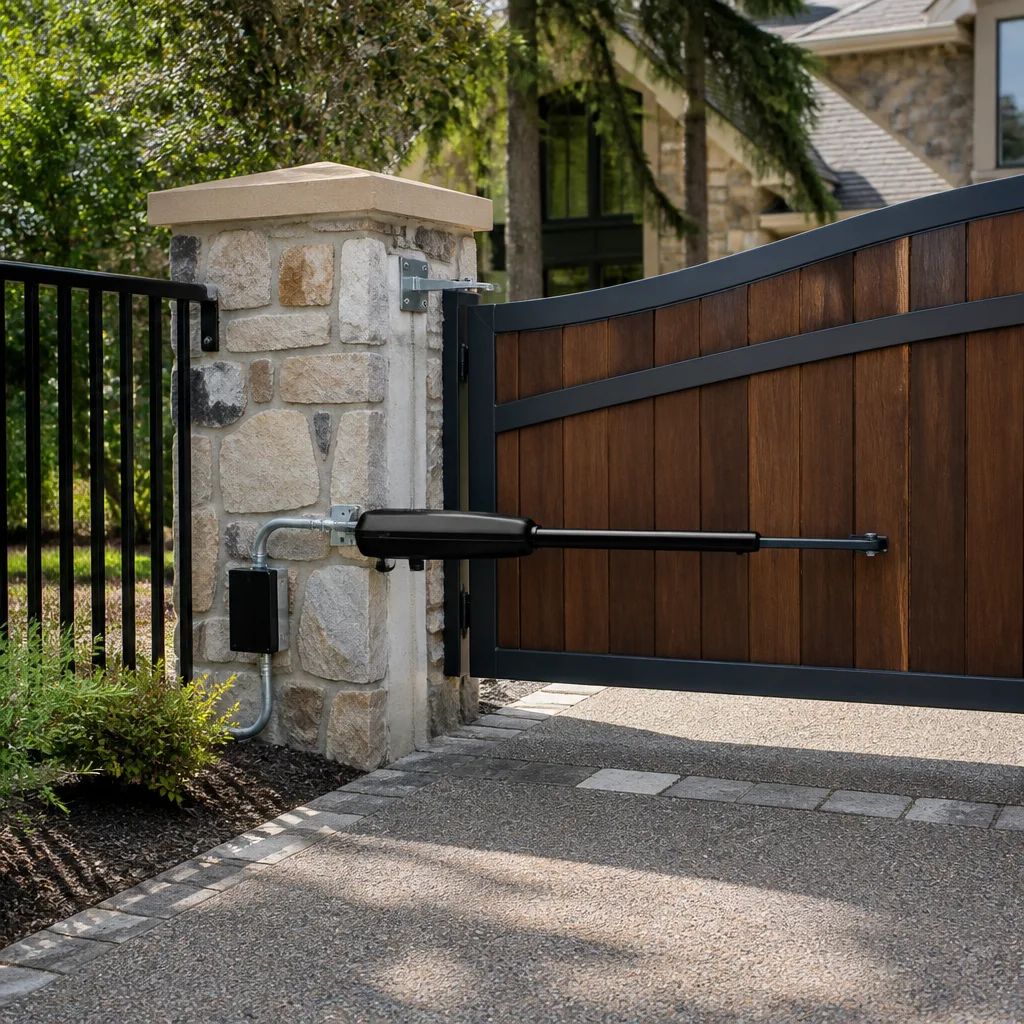 LiftMaster operators
Free on-site gate assessment - hinges, posts, and your LiftMaster or Nice gate operator checked before anything is quoted
The assessment is free and the quote is the invoice.
Get your free estimateThe Complete Guide to Gate Repair in Ontario
The most common gate repair mistake in Ontario isn’t skipping maintenance. It’s treating a control board failure like a motor failure and buying the wrong fix twice. A gate that hums but doesn’t move, a keypad that stopped responding, a sensor that trips for no reason: none of these are the motor. They’re the brain. In this guide, we’ll map the full repair landscape in Ontario by failure category, not by gate style, so you can place your problem in the right box before spending a dollar on parts or our Gate Repair services.
Quick Answer
Most gate failures in Ontario trace back to one of four root causes: mechanical wear, electrical failure, structural damage, or operator misconfiguration. Identifying which category your problem falls into before calling a repair company determines every downstream decision about parts, labor, and timeline. A dedicated gate specialist in Ontario can usually diagnose the correct root cause on the first visit, while a generalist often cycles through theories across multiple trips.
Styles & brands we work with
Table of Contents
- The Four Root Causes of Gate Failure
- Mechanical Wear: Hinges, Rollers, and Chains
- Electrical Failure: Boards, Motors, and Sensors
- Structural Damage and Ontario’s Clay-Heavy Soil
- Operator Misconfiguration: Limits, Force, and Loops
- Licensing: What Requires a C-10 or C-13 in California
- How Single-Trade Specialists Diagnose in One Visit
- Parts Stocking: What’s on the Truck vs. What’s Ordered
- Common Mistakes to Avoid
- When to Call a Professional
- Frequently Asked Questions
- The Bottom Line
The Four Root Causes of Gate Failure
Every gate repair in Ontario fits into one of four categories, and the fix for each is completely different. A hinge replacement costs a fraction of a control board swap. A post shift needs concrete work, not new electronics. When you call a repair company without knowing which category you’re in, you’re paying them to figure it out, and if they guess wrong, you pay twice—something our Gate Repair Cost Breakdown: The Ontario Homeowner’s Reference for 2026 helps you avoid.
The four categories break down like this:
- Mechanical wear: hinges, rollers, chains, wheels, and bearings that physically degrade over time. These parts move every single time the gate opens or closes, and in Ontario’s summer heat and occasional winter rain, metal-on-metal contact accelerates.
- Electrical failure: control boards, motors, capacitors, sensors, loop detectors, and wiring. These components handle the thinking and the power delivery. They fail from moisture, power surges, age, or manufacturing defects.
- Structural damage: shifted posts, sagging gate frames, cracked concrete, and weld failures. In Ontario, the clay-heavy soil expands and contracts with moisture, and this movement is the single most overlooked cause of gate problems in the city.
- Operator misconfiguration: limit switches set incorrectly, force settings too high or too low, loop detector sensitivity out of range, and remote controls programmed wrong. The hardware is fine. The settings are not. This category costs the least to fix but is the most misdiagnosed.
Placing your problem in the right category before you call means you can describe the symptom accurately to the technician, and you can tell within minutes whether the person on the phone actually understands your equipment or is reading from a script.
Mechanical Wear: Hinges, Rollers, and Chains
Mechanical failures announce themselves with sound. A gate that groans, squeals, scrapes, or rattles is telling you something is physically wearing out. The most common mechanical repairs we handle in Ontario are hinge replacements on swing gates and roller or wheel replacements on slide gates.
Swing gate hinges take the full weight of the gate leaf every time it cycles, and they’re exposed to the elements. Over five to ten years, the hinge pins wear down, the bearing surfaces oval out, and the gate starts to sag. A sagging gate catches on the ground, strains the operator, and eventually burns out the motor if the problem isn’t addressed. Replacing hinges early costs a couple hundred dollars. Replacing hinges and a motor costs four figures.
Slide gate wheels and rollers have a similar lifecycle. A slide gate rides on steel wheels along a track, and those wheels wear flat over time. When they do, the gate scrapes, the operator strains, and the chain or belt tension changes. In Ontario, dust and grit from the surrounding landscape accelerate wheel wear. We regularly see gates in Ontario neighborhoods where the wheels have been worn for months and the homeowner kept tightening the operator instead of addressing the root cause.
Chains and belts on slide gate operators stretch and wear. A chain that’s too loose can skip teeth on the sprocket, which sends a jolt through the operator every cycle. Belts crack and tear. Both need periodic tension adjustment and eventual replacement. The good news with mechanical wear is that it’s predictable. It develops gradually, it makes noise, and it leaves visible evidence. The bad news is that ignoring it turns a minor repair into an expensive one.
Electrical Failure: Boards, Motors, and Sensors
Electrical failures are the category most often misdiagnosed. When a gate stops responding to the remote, homeowners assume the motor is dead. In our experience, the control board is the culprit at least as often as the motor, and replacing the motor first is the classic double-purchase mistake this guide exists to prevent.
The control board is essentially the gate’s computer. It interprets signals from remotes, keypads, loop detectors, and safety sensors, and it tells the motor what to do. When a LiftMaster or FAAC board fails, the symptom can look identical to a failed motor: the gate doesn’t respond. The difference is diagnostic. A board failure often shows partial symptoms, like the gate opening but not closing, or responding to the keypad but not the remote. A motor failure is usually binary: power reaches it and nothing happens, or it hums and strains without movement.
Board failures in Ontario happen for a few reasons. Power surges from Southern California Edison outages are a major trigger, especially during heat waves when transformers strain. Ants and other insects nesting inside operator housings create shorts across board traces. And moisture intrusion through worn gaskets or improperly sealed conduit runs corrodes connections over time.
Motors do fail, but less often than boards. A motor that’s been run with a misaligned gate or incorrect force settings for years will eventually burn out its windings or capacitor. When we replace a motor in Ontario, we always check the mechanical alignment and the board settings at the same time, because replacing the motor without fixing the underlying strain just sets up the next failure.
Safety sensors and loop detectors round out the electrical category. Photo eyes get dirty or misaligned and the gate refuses to close. Loop detectors fail and the gate doesn’t open for cars arriving from the street. These are inexpensive parts that cause expensive-looking symptoms, and a technician who knows what to test will find them in minutes.
Structural Damage and Ontario’s Clay-Heavy Soil
Ontario sits on clay-heavy soil, and that single fact causes more misdiagnosed gate repairs than any other local condition. Expansive clay absorbs water during the rainy season and expands, then contracts as it dries out in the summer heat. The resulting ground movement shifts gate posts, moves concrete pads, and throws off gate alignment in ways that mimic hinge failure, operator failure, and even board failure.
Here’s how to tell the difference before you start buying parts. A gate that’s sagging because of worn hinges will sag consistently, all year round, and you’ll see visible play in the hinge pins. A gate that scrapes only seasonally, or one whose alignment shifts after heavy rain and then settles, is more likely sitting on a post that’s moving with the soil. Digging is not required to spot it. Look at the gap between the gate and the post at the top versus the bottom. If that gap changes over weeks or months, the post is moving. Hinges don’t change geometry on their own.
Structural repairs in Ontario usually involve one of three fixes. For minor post movement, re-shimming and re-aligning the hinges restores function without touching concrete. For posts that have shifted significantly, the post needs to be reset or the concrete pad needs repair. And for slide gates, a shifting pad causes the track to bow or twist, which the gate then fights against on every cycle.
The structural category is the one that rewards early intervention. A post that’s shifted an inch is usually fixable with adjustment. A post that’s shifted four inches needs concrete work. Every month of ignored movement makes the repair bigger and more expensive. If your gate in Ontario scrapes or rubs and you didn’t have that problem last year, check the post before you call anyone.
Operator Misconfiguration: Limits, Force, and Loops
Operator misconfiguration is the best-case scenario in gate repair, because the parts are usually fine and the fix is programming, not replacement. It’s also the category that general repair companies miss most often, because it requires brand-specific knowledge of how each operator’s settings work.
Limit switches tell the operator where the gate should stop. If limits are set too tight, the gate stops short or reverses immediately. Set too loose, the gate slams into the end stop and the operator strains against a physical barrier. Each brand handles limits differently. A LiftMaster operator programs differently than a FAAC or BFT unit, and a technician who knows your specific brand resolves limit issues in minutes. A technician guessing at the menus can burn an hour and still get it wrong.
Force settings control how hard the operator pushes. Set too low, the gate stalls halfway and reverses. Set too high, the gate becomes a safety hazard and can cause property damage or injury. California requires automatic gates to meet UL 325 safety standards, which mandate specific force limits and safety device requirements. Our electric gate repair in Ontario service routinely corrects force settings that were never right in the first place, usually from a prior repair where someone cranked up the force to mask a mechanical problem instead of fixing it.
Loop detectors and safety sensors get misconfigured too. Loop sensitivity set too high triggers the gate for every passing truck on the street. Set too low, and the gate ignores cars sitting on the loop. Photo eyes that aren’t aligned cause the gate to refuse to close, which many people read as a board failure. The fix is a screwdriver and five minutes, but only if the technician knows where to look.
Licensing: What Requires a C-10 or C-13 in California
California law is specific about who can legally perform electrical work, and gate repair crosses the line between mechanical and electrical depending on what’s being fixed. Understanding this protects you from hiring someone who isn’t legally allowed to touch your equipment.
Mechanical repairs like hinge replacement, roller replacement, chain tensioning, and post adjustment are generally within the scope of a general contractor or even a competent homeowner. No electrical license is required when you’re only touching the metal parts. That said, structural post resetting that involves concrete work should be done by someone who carries the appropriate contracting license for the scope.
Electrical work is different. In California, a C-10 electrical contractor license is required for work on circuits, panels, and line-voltage wiring. A C-13 low-voltage contractor license covers systems under 100 volts, which is where most gate operator work falls: control boards, sensors, loop detectors, and access control wiring. When the repair involves running new line voltage to a gate operator or tapping into a panel, a C-10 is required. When it’s board replacement, sensor wiring, or access system integration, a C-13 is the relevant license.
What’s legally owner-serviceable? Replacing remote batteries, cleaning photo eyes, tightening visible bolts, and making minor adjustments to things that don’t require opening the operator housing. Anything that exposes line voltage terminals or requires wiring changes should be left to a licensed contractor. And honestly, for automatic gate work, the safety implications alone justify a professional, regardless of the legal letter of the law. A gate that’s 15 feet long and 500 pounds moving under power is not something to debug by trial and error.
We take this seriously. Our gate repair in Ontario work is done by technicians trained on the electrical and mechanical sides of every operator we service, and we don’t touch work outside our single-trade scope. That focus is exactly why we carry the licensing and the parts to do the job correctly the first time.
How Single-Trade Specialists Diagnose in One Visit
The diagnostic gap between a gate specialist and a generalist is the difference between one visit and three. We’re not saying this to disparage handymen, because a good handyman knows his limits. The problem is that a customer with a broken gate often doesn’t know what they need, and a generalist will take the job even when the job needs brand-specific electrical knowledge he doesn’t have.
Here’s what a single-trade diagnostic process looks like in Ontario. The technician arrives, asks what the gate is doing and when it started, and then checks the system in a specific order. Mechanical alignment first, because a misaligned gate causes stress on every other component and it’s the easiest thing to see. Electrical power and board status next, using a meter to check incoming voltage, then board outputs. Then operator programming, because limit and force settings explain symptoms that look like hardware trouble. Then sensors and loops, because they’re the most common cause of “gate won’t close” calls.
A technician who has worked on hundreds of Elite swing operators or Mighty Mule residential units knows the failure pattern for each one. He’s seen a Mighty Mule board fail from a power surge and knows the test points. He’s replaced the ribbon cable on a Ghost Controls unit. He knows which FAAC boards have a known capacitor issue. That brand-specific pattern recognition is what compresses three diagnostic visits into one.
A generalist doing gate repair in Ontario, by contrast, is learning your equipment in real time. He tests a theory, orders a part, returns, tests another theory, orders another part. The labor charges accumulate, the gate stays down longer, and the customer pays tuition for someone else’s education. If you’re managing a property in Ontario where downtime means a security gap or a tenant complaint, that difference matters a lot.
Our recommendation is simple: for any automatic gate problem involving electronics, call a gate specialist first. The diagnostic cost is usually comparable, and the total cost is almost always lower.
Parts Stocking: What’s on the Truck vs. What’s Ordered
This is the practical difference that doesn’t show up in a Google search. A dedicated gate company in Ontario stocks gate parts on the truck. A generalist orders parts and waits. The distinction can add days or weeks to your repair timeline.
We carry boards, sensors, remotes, capacitors, and common mechanical components for the operators we service. If your LiftMaster operator has a dead board, there’s a good chance the replacement is on the truck at the first appointment. If your FAAC needs a new limit switch, it’s in the bin. This is possible because we specialize exclusively in gates. Every part on the truck is a gate part. Nothing is shared with unrelated trades, so the inventory is deep in exactly the things that fail.
A generalist doesn’t carry this inventory. He carries whatever fits in his van for the ten trades he services, and gate parts usually aren’t on that list. So he diagnoses, drives to a supply house or places an online order, and returns when the part arrives. If the diagnosis was wrong, the process repeats. Your gate sits broken in the meantime.
There’s a second layer to this. Some gate parts aren’t sitting on shelves anywhere in the Inland Empire. Boards for discontinued operators sometimes have to be sourced from wholesalers or rebuilt by specialty shops. A gate specialist knows which boards can be substituted and which need exact replacements, and can often keep an older system running with a compatible part while the exact one ships. That knowledge comes from years of nothing but gate work.
If you have a gate system that’s more than ten years old, parts availability is a genuine consideration for any repair conversation. Ask the company on the phone whether they stock parts for your brand. The answer tells you a lot about what the service call will actually look like.
Common Mistakes to Avoid
- Replacing the motor when the board is the problem. The most expensive mistake in gate repair. A failed board can mimic a failed motor perfectly, and the only way to know is testing. A technician who swaps the motor without confirming is guessing with your money.
- Ignoring seasonal post movement. In Ontario’s clay soil, a gate that scrapes only after rain isn’t broken hardware. It’s ground movement. Fixing the hardware without addressing the post means the problem returns next season.
- Ordering a new remote when the receiver board is the issue. If the remote doesn’t work, test with another remote before replacing either. A board that won’t accept any remote signal is a receiver issue, not a remote issue.
- Cranking up the force setting to power through a mechanical problem. This masks the real issue, stresses the operator, and can violate California’s UL 325 safety requirements. Force settings that are too high turn a gate into a safety hazard.
- Hiring a generalist for an electric gate problem and paying for the learning curve. Automatic gate diagnosis requires brand-specific experience. A generalist who doesn’t know your operator is charging you for education.
- Waiting until the gate completely fails to make the call. Noisy hinges, slow movement, and intermittent operation are early warnings. Every day of ignored symptoms pushes the repair from hundreds to thousands of dollars.
When to Call a Professional
Call a professional when the gate is automatic and the symptom is electrical: no response to remotes, intermittent operation, a gate that reverses unexpectedly, or any burning smell from the operator housing. These are symptoms with high diagnostic stakes and real safety implications. A gate moving under power without functioning safety sensors is a hazard. Call a professional when the gate is visibly sagging or scraping, because mechanical stress becomes motor failure if it’s ignored. Call a professional when the gate is automated and you’ve already replaced a part and the problem didn’t go away, because that’s the signal that the diagnosis was wrong and the next step is professional testing, not another parts cannon. Ontario Gate Company offers free estimates in Ontario. Call (855) 707-3634 and describe your symptom. We’ll tell you honestly which category your problem likely falls into before anyone schedules a visit.
Frequently Asked Questions
Gate repair in Ontario typically runs $150 to $400 for mechanical issues like hinge or roller replacement, and $250 to $800 for electrical repairs like board replacement or sensor repair, depending on the brand and the specific part. Minor programming corrections often cost under $200. The price is always quoted and agreed before any work starts, so there are no surprises after the repair.
If the gate hums or strains but doesn’t move, the motor is getting power and the problem is likely mechanical binding or a failed capacitor, not necessarily a dead motor. If the gate doesn’t respond at all, or responds to some inputs but not others, the board is the more likely culprit. Testing with a multimeter confirms which one has failed, which is exactly what a trained gate technician does on-site before recommending any part replacement.
Many mechanical repairs and programming corrections can be completed the same day if the needed parts are on the truck. Electrical repairs depend on parts availability for your specific operator brand. Call (855) 707-3634 with your symptom and brand, and we’ll give you a realistic timeline based on what we carry and what we’d need to order.
Electrical work on gate operators falls under California’s C-10 or C-13 licensing requirements, depending on the voltage and the nature of the wiring work. Mechanical work like hinges and rollers has different requirements. The simplest path is a contractor whose licensing covers automatic gate systems, and our gate installation in Ontario service is structured so repair and installation work are both performed by technicians qualified on the electrical and mechanical sides.
We service LiftMaster, FAAC, BFT, Linear, Viking, Ghost Controls, DoorKing, Elite, and Mighty Mule operators. That covers the spectrum from residential swing gate systems to commercial slide operators, and each technician is trained on the common failure points of each manufacturer’s equipment before they arrive at your gate.
That specific symptom almost always points to a safety sensor issue, not a board or motor failure. If the photo eyes are misaligned, dirty, or blocked, the gate refuses to close because it thinks something is in the path. Loop detector issues and force settings can also cause the refusal to close. A technician who tests sensors before swapping boards resolves this quickly and inexpensively.
The Bottom Line
Gate repair in Ontario comes down to correct diagnosis before any money changes hands. The four root-cause categories, mechanical, electrical, structural, and misconfiguration, each demand a different fix and a different skill set, and mistaking one for another is the most common reason gate repairs cost more than they should. Ontario’s clay soil makes post movement a persistent local variable, and California’s licensing laws mean the electrical side of the trade isn’t something to gamble on. A dedicated gate specialist with brand-specific knowledge, parts on the truck, and a single-trade focus is the most direct path from broken gate to fully restored operation. If you’re dealing with a gate problem in Ontario, call (855) 707-3634 and describe the symptom. We’ll tell you what category it’s in and what the fix actually involves.
Written by the team at Ontario Gate Company, serving Ontario since 2011. For more guides & resources, visit our blog.
See the difference
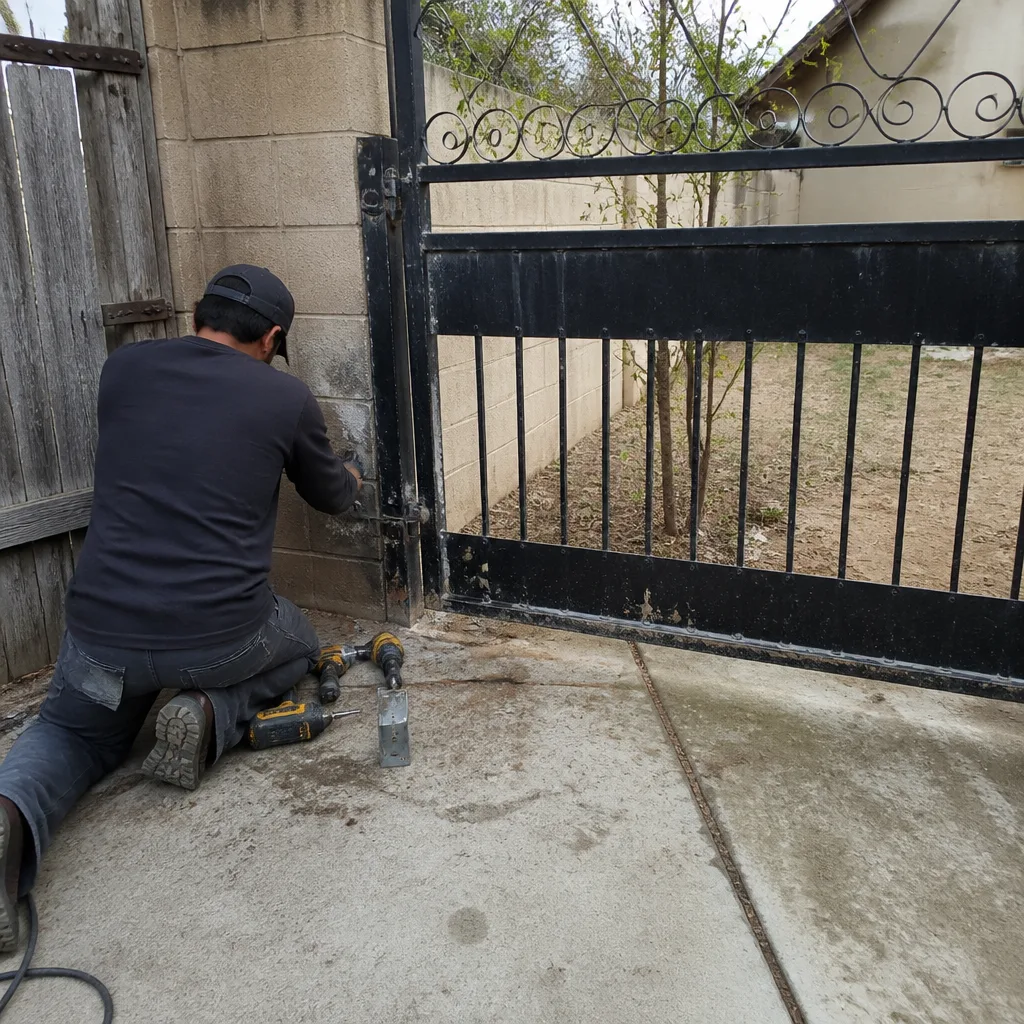 Before
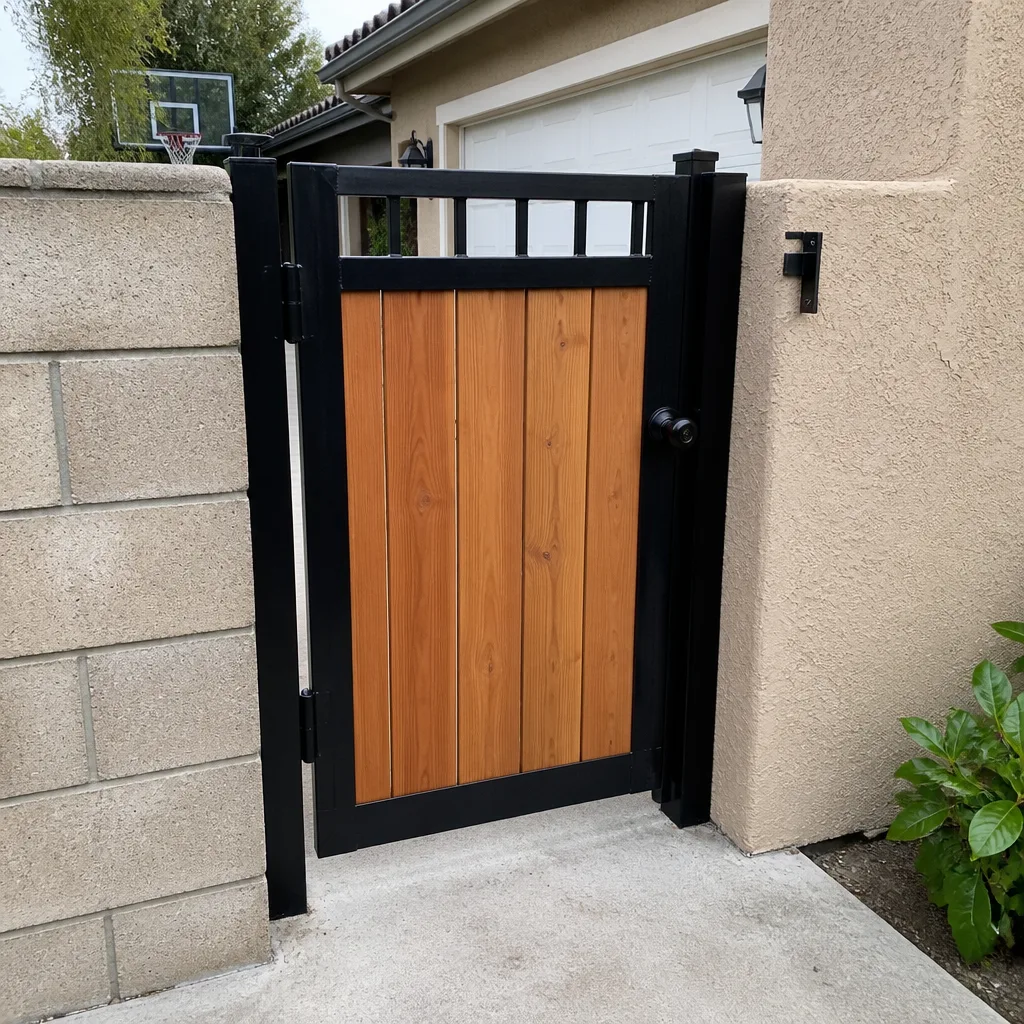 After
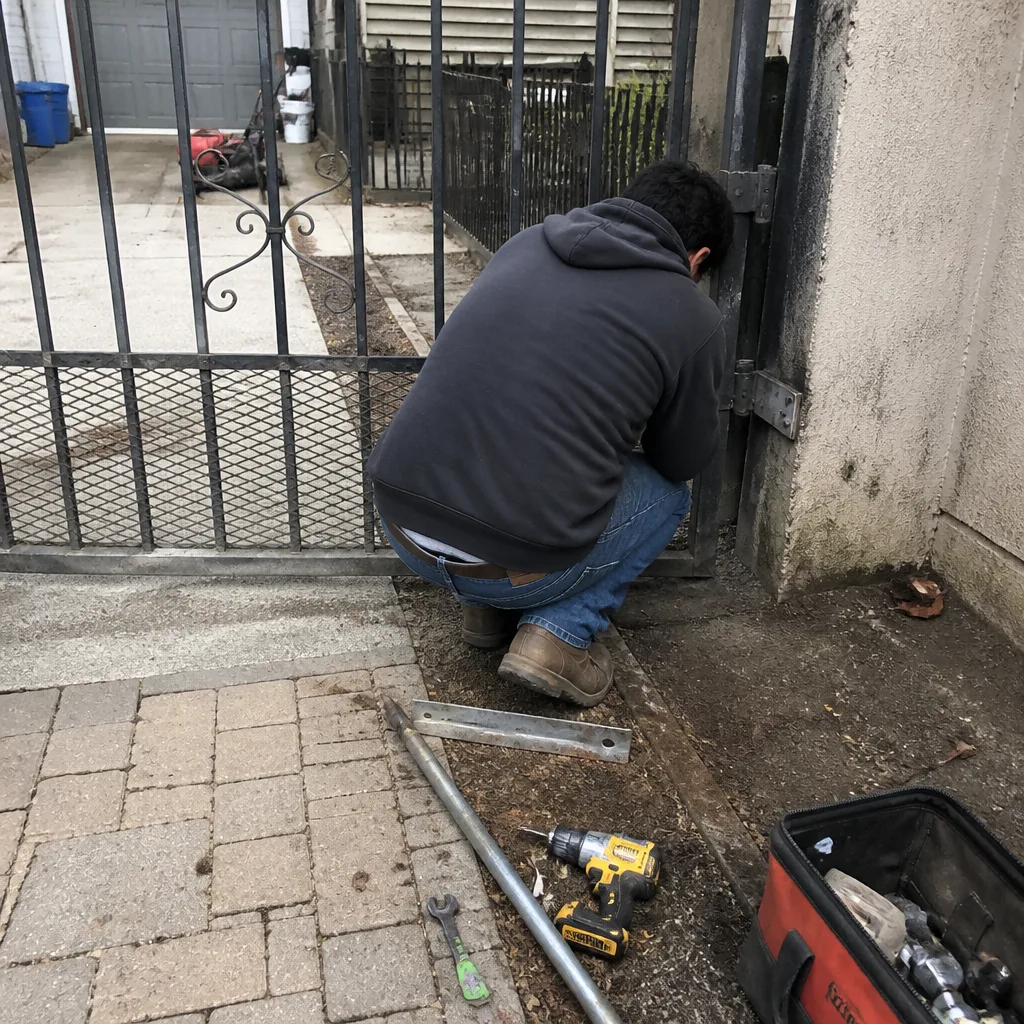 Before
 After
 Before
 After