
Last updated October 30, 2026
 Wrought iron
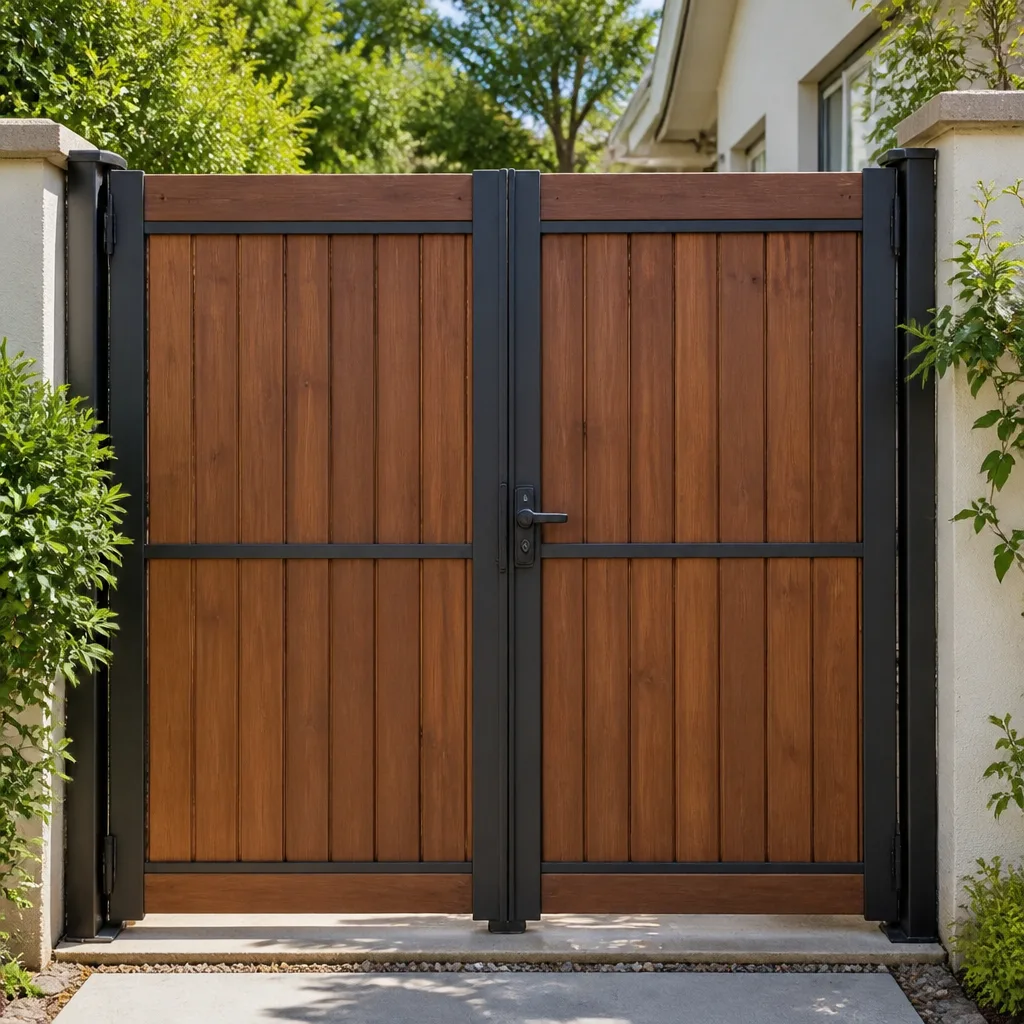 Wood & steel frame
 Farm & ranch
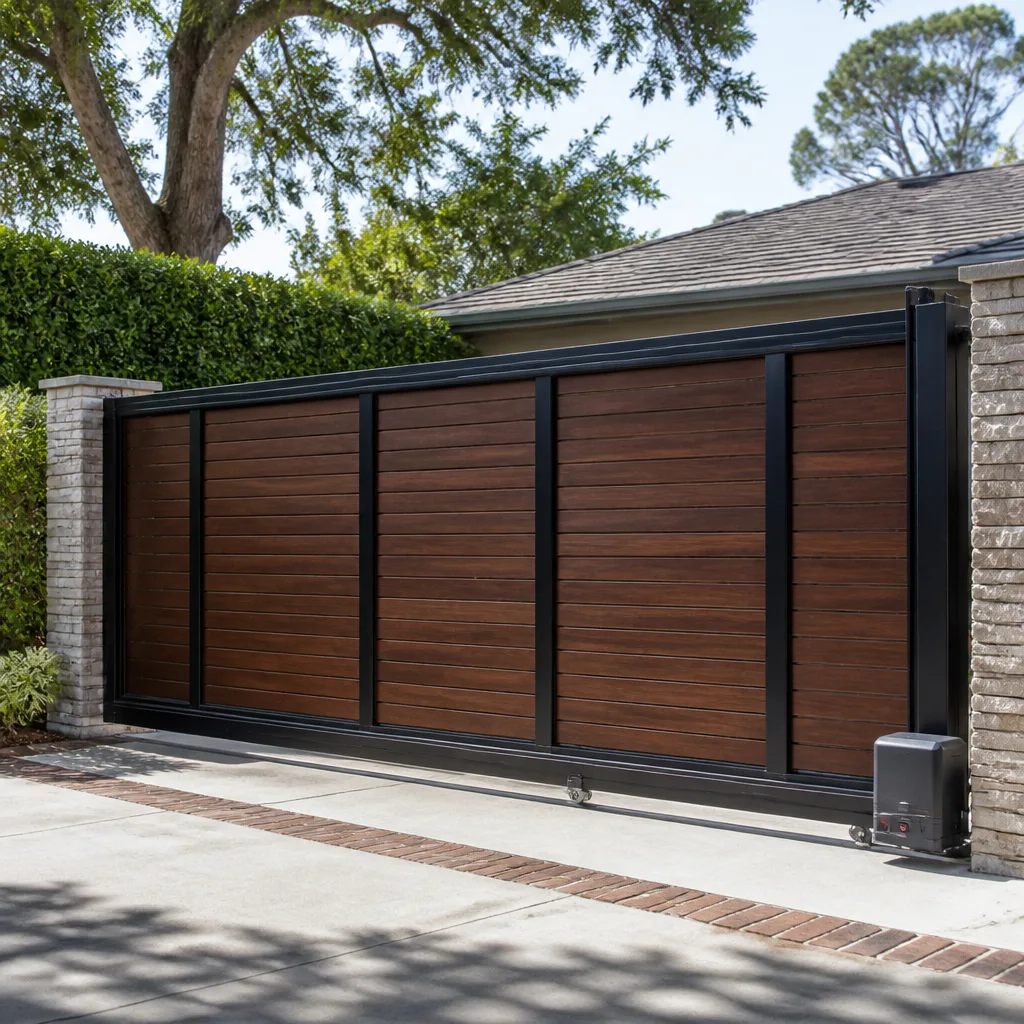 Sliding driveway gates
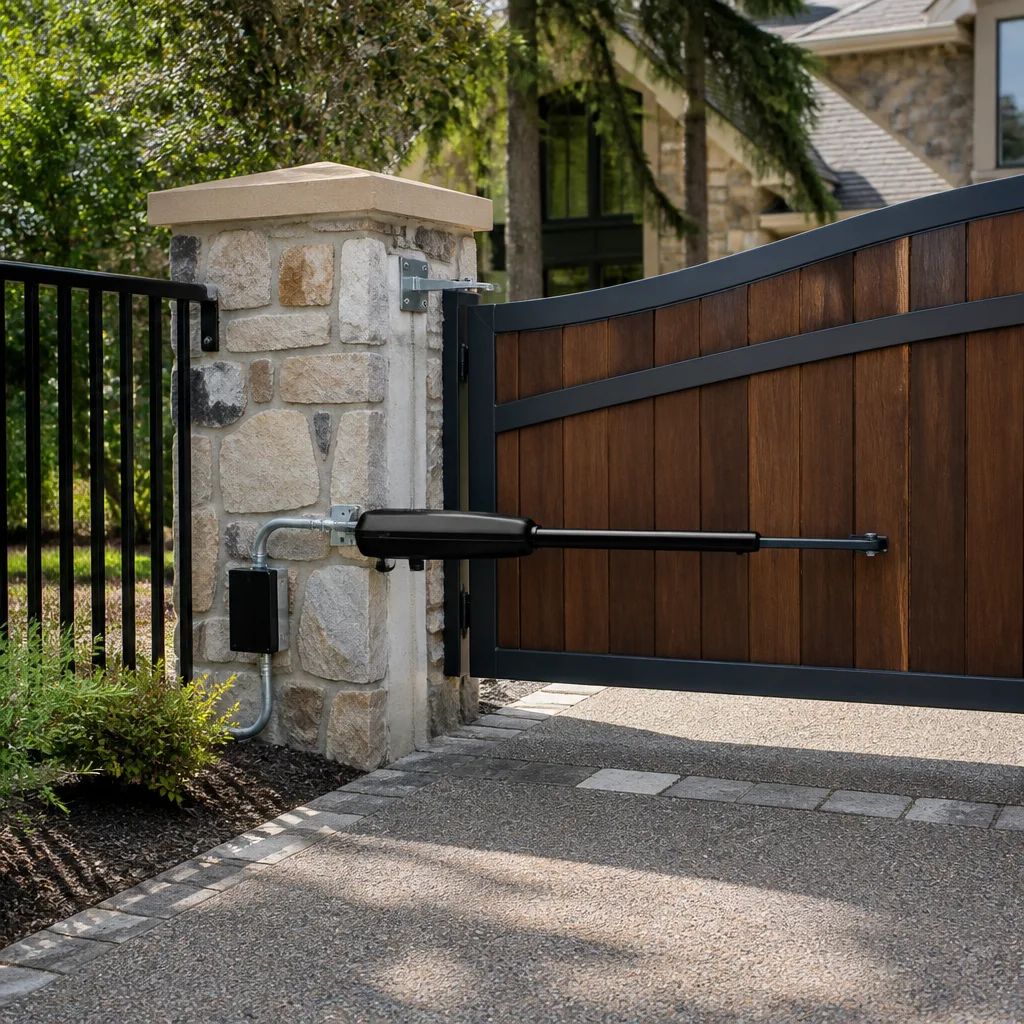 LiftMaster operators
Free on-site gate assessment - hinges, posts, and your LiftMaster or Nice gate operator checked before anything is quoted
The assessment is free and the quote is the invoice.
Get your free estimateGate Repair Warning Signs: A Ontario Homeowner’s Reference Guide
Here’s something that surprises most Ontario homeowners the first time they hear it: a gate that suddenly reverses before closing isn’t actually broken. It’s doing exactly what the manufacturer programmed it to do. UL 325 obstacle detection is now standard on every automatic gate operator sold in California, and when the sensors detect resistance, the gate stops and reverses. So the gate isn’t glitching. Something tripped the safety system, and that something is your warning sign. Most gate failures announce themselves weeks before the gate actually stops moving. You just need to know which sounds, movements, and visual cues mean “keep an eye on it” and which ones mean “stop using this gate today.” This reference guide is organized by urgency tier so you can tell the difference before a warning sign becomes a breakdown in Ontario.
Styles & brands we work with
Quick Answer
Gate repair warning signs in Ontario CA fall into three urgency tiers. A gate that closes on an obstacle without reversing, a post leaning more than 3 degrees, or exposed wiring near the operator means stop using the gate and call a Gate Repair specialist immediately. Unusual motor noise, inconsistent remote response, or a changing gap at the latch means schedule service within the week. Surface rust at welds, slow-but-steady operation, or reduced remote range in summer heat means document it and monitor it over the next month.
Table of Contents
- Tier 1 Warning Signs: Stop Using the Gate Today
- Tier 2 Warning Signs: Schedule Service Within the Week
- Tier 3 Warning Signs: Log It and Monitor It
- Ontario-Specific Warning Signs Other Guides Miss
- How to Document Warning Signs for a Technician
- Common Mistakes to Avoid
- When to Call a Professional
- Frequently Asked Questions
- The Bottom Line
Tier 1 Warning Signs: Stop Using the Gate Today
These are the warning signs that indicate an immediate safety hazard or a component failure that’s no longer “on its way” but actively happening. In our work as a gate-only repair company in Ontario, we treat these as emergency conditions. A gate is a moving vehicle-barrier weighing anywhere from 300 pounds for a light residential swing gate to over 1,500 pounds for a commercial slide gate. When a component fails under that load, the energy has to go somewhere, and it usually goes into posts, hinges, or the operator itself.
1. Gate Closes on an Obstacle Without Reversing
This is the single most serious warning sign a homeowner can encounter. Every automated gate in California must comply with UL 325, which requires two independent means of obstruction detection. When both fail simultaneously, the gate becomes a crush hazard for children, pets, vehicles, and adults. A gate that closes on a person or object without reversing has a failed or bypassed safety circuit. This isn’t a tuning issue. The causes we find most often in Ontario are failed photo eyes that haven’t been cleaned or aligned, a control board input that’s been jumped or shorted, or an operator whose force sensitivity setting was raised too high during an earlier “adjustment.” If your gate makes contact and keeps pushing, disconnect power to the operator at the breaker and leave the gate in the open or closed position where it’s stable. Then call for electric gate repair in Ontario before putting it back in service.
2. Visible Post Lean Greater Than 3 Degrees
A gate post that’s moved out of plumb is the physical equivalent of a fire alarm. The post is the anchor point. It carries the full weight of the gate leaf and every opening and closing cycle transfers dynamic load through the hinge or the track system into that post. When the post starts to lean, the gate’s center of gravity shifts. What happens next is predictable: hinges bind, the gate leaf sags, the latch no longer aligns, and slide gate rollers develop uneven wear that destroys them in months instead of years. A lean greater than 3 degrees is visible to the naked eye. Hold a level or even a phone level app against the post. If the bubble is more than three lines out, that post has lost structural integrity. In Ontario, we see this after heavy rain seasons when the soil around post bases gets saturated and loses bearing capacity. A welded repair or a post re-set is usually required. This isn’t a homeowner repair.
3. Exposed Wiring at Ground Level Near the Operator
Low-voltage wiring for gate operators runs underground from the power source to the operator and from the operator to the safety devices. When that wiring becomes exposed due to soil erosion, landscape work, or animal activity, you have two problems running at the same time. First, low-voltage wire with a nick in the sheath will corrode within weeks in Ontario’s alkaline soil, causing intermittent shorts that make the gate behave unpredictably. Second, exposed wire is a tripping and cutting hazard, and if the wire is carrying 110V or 240V to the operator instead of low-voltage control signal, it’s an electrical shock hazard. If you see any wiring that isn’t inside conduit and isn’t buried, power down the gate and call a gate repair professional. This is not a “wrap it in electrical tape” scenario.
Tier 2 Warning Signs: Schedule Service Within the Week
Tier 2 signs are what we call “failure precursors.” The gate still works. It opens and closes, and it doesn’t pose an immediate danger. But the sound, the movement, or the responsiveness has changed, and that change maps to a specific component that is now degrading. Addressing Tier 2 problems early is what separates a $300 repair from a $1,800 operator replacement. Our single-trade focus means we diagnose these on-site with gate-specific diagnostic equipment, not guesswork.
1. Unusual Motor Cycling Noise
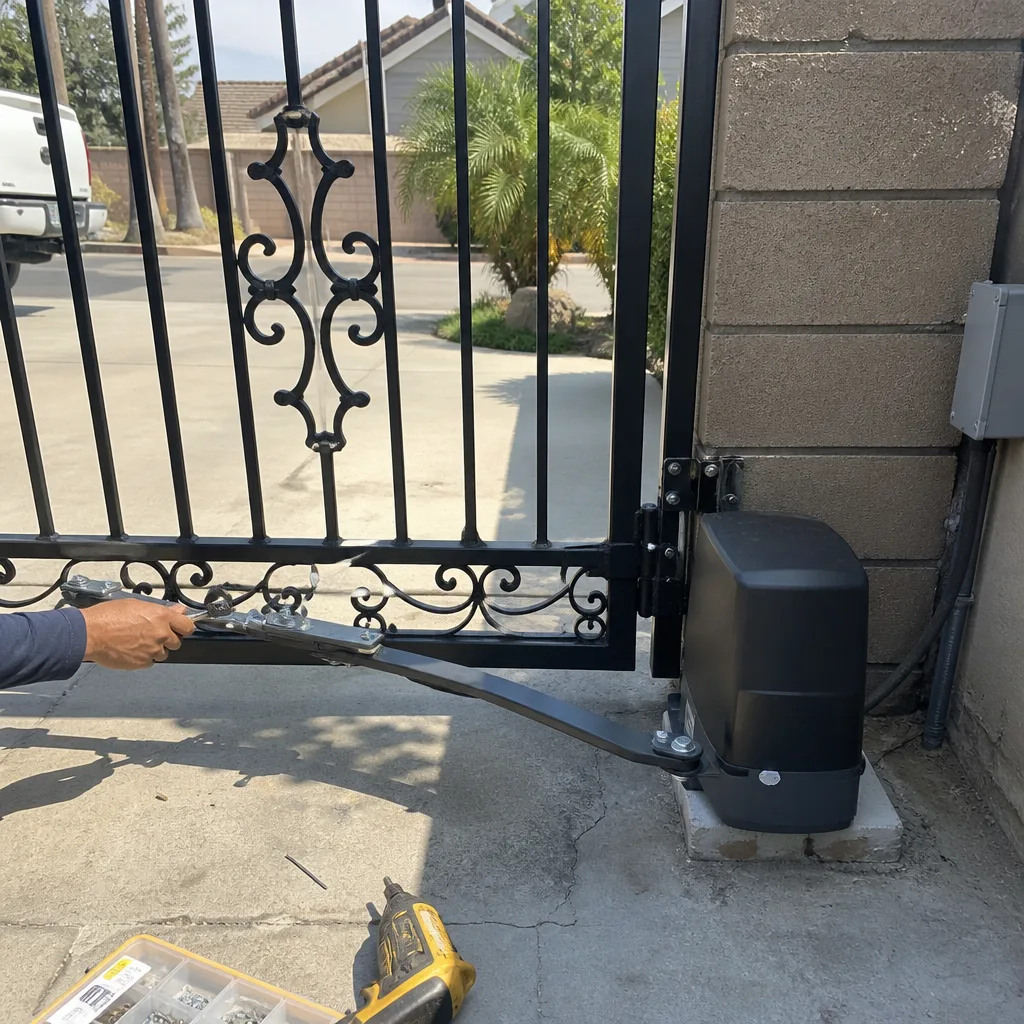
Every gate operator has a baseline sound profile. A LiftMaster operator sounds different from a FAAC or a BFT, but once you’ve lived with your gate for a few months, you know what “normal” sounds like. A change in that sound is a warning sign. A grinding noise on a slide gate usually indicates worn drive gears or chain tension that’s drifted. A humming followed by a click-thunk on a swing operator often means the start capacitor is weak and the motor is laboring. A high-pitched squeal can be a failing bearing in the gearbox. We service all nine major operator brands including Viking, Ghost Controls, DoorKing, and Elite, and each has a known set of failure modes. When we arrive, we’re listening for the specific sound your operator’s design should and shouldn’t make. If your gate sounds different than it did last month, schedule service. The noise won’t fix itself.
2. Inconsistent Response to Remote Commands
This is the most commonly dismissed warning sign because it’s intermittent. The remote works, then it doesn’t. You press the button twice, maybe three times, and the gate opens. Then it works fine for three days. The components that cause intermittent response are almost always declining, not self-healing. On a Ghost Controls or Mighty Mule residential system, we check the remote battery, then the antenna position on the control board, then the receiver sensitivity. On DoorKing and Viking commercial operators, intermittent response often traces to the radio receiver module or to signal interference from a new wireless device in the area. If you find yourself pressing the button more than once in a routine day, that’s a warning sign worth a service call. The gate is telling you the command signal isn’t reaching the operator reliably, and the cause is typically a component with finite remaining life.
3. Gap Changes at the Gate Stop or Latch
Your gate’s latch should seat with the same gap today as it did on the day it was installed. A changing gap means something has moved. On a swing gate, a widening gap at the latch side combined with a tighter gap at the hinge side means the gate leaf has sagged, usually due to hinge wear or post movement. On a slide gate, a changing gap at the stop post can mean the rollers have worn flat spots or the track has shifted. These gaps may appear as a visible misalignment or as a gate that now rattles in the wind when it used to sit tight. In Ontario, we service gates across the full lifecycle, so we see the same gate at install, at repair, and at end-of-life. The gap change you notice today is the same thing we’d measure with a tape measure during a gate repair in Ontario visit. Document it and call before the misalignment chews up the latch, the hinges, or the roller carriages.
Tier 3 Warning Signs: Log It and Monitor It
Tier 3 signs are not emergencies and not immediate service triggers. They’re early-stage changes that become actionable if they progress. The smart homeowner creates a record. When the gate finally does need service, that record gives the technician a timeline of when each symptom first appeared, and that timeline shortens diagnosis considerably.
1. Minor Surface Rust at Weld Points
Steel gates in Ontario live in a semi-arid climate with occasional significant rain. That’s actually a comparatively gentle environment for powder-coated steel compared to coastal California. But weld points are always the first place rust appears because the factory finish is compromised at the weld, and the heat-affected zone is more reactive than the surrounding steel. Minor surface rust at welds is a cosmetic issue until it isn’t. If the rust is reddish-orange and comes off on your finger, monitor it. If it becomes dark brown, flaking, or the metal begins pitting, that’s structural degradation starting. The way to monitor is simple: take a photo of each rust spot every six months with the same camera angle. If nothing changes, the rust is passive. If the pitting deepens, you need a repair that removes the rust mechanically and re-coats the area. That’s a small job in year two and a big fabric-and-weld job in year eight.
2. Slow-but-Consistent Open/Close Speed
A gate that opens and closes noticeably slower than it did when new, but does so consistently without any change in sound, is usually telling you one of two things: hydraulic fluid level is low in a hydraulic operator, or the operator’s speed setting was intentionally reduced during a previous service call and no one mentioned it. Both are worth checking. A low fluid level on a BFT or FAAC hydraulic operator will gradually slow the gate as the pump cavitates, and if it runs dry, the pump fails. That’s an expensive repair that was predictable months in advance. A gate that was deliberately slowed for safety or noise reasons is fine, but you should know which scenario you’re in. Schedule a gate installation consultation or a repair visit to have the operator inspected and the history noted.
3. Remote Range Reduction in Summer Heat
Many Ontario homeowners report that their gate remote works from the car, but only when they’re closer than normal, and only during the hottest months. This is a real phenomenon with a physical cause. Remote transmitter batteries lose output voltage in high heat, which reduces effective range. Gate receiver modules can also drift off-frequency when the control board runs hot in direct sun on a 105-degree day. If you notice this pattern, first replace the remote battery. If the range comes back, it was the battery. If it doesn’t, log the observation and note the air temperature and distance when it happens. That specific information helps a technician decide between a new remote, a relocated antenna, or a receiver replacement. We see this most often on residential swing gate systems from Ghost Controls and on older DoorKing operators without an external antenna kit.
Ontario-Specific Warning Signs Other Guides Miss
Ontario has a climate and soil profile that create failure patterns you won’t find on a generic national gate repair guide. The city sits on alluvial fan deposits from the San Gabriel Mountains, which means the soil is a mix of sand, gravel, and silt that drains quickly in some areas and holds water in others. For Seasonal Gate Repair Care for Ontario: Year-Round Homeowner’s Guide, understanding these patterns is essential. Gate post foundations behave very differently depending on which pocket of soil your property sits on. The summer heat in Ontario is real, and sustained direct sun on a gate operator housing changes the internal operating temperature enough to stress electronics. And the city’s repaving cycles can affect gates in ways that homeowners never connect to the work happening in the street.
Cracking at the Post Base Indicating Soil Movement
Concrete gate post footings in Ontario experience two seasonal forces. In summer, the soil dries and contracts away from the footing. In winter rains, the soil swells and presses on the sides. Over enough years, this cycle can cause micro-cracks in the concrete at the base of the post, visible as hairline fractures in the concrete pour or in the stucco envelope around the post. These cracks are benign until they widen. A crack that stays hairline-width for three years is cosmetic. A crack that grows from hairline to 1/8-inch over a single winter means the footing is losing integrity, and the post will eventually shift. This matters because a shifted post changes gate geometry, and gate geometry changes gate loads, and gate loads are what destroy hinges and operator mounts. If you see cracking at the post base in Ontario, photograph it every spring and fall. If it’s stable, leave it. If it’s growing, call a gate specialist who understands local soil behavior.
Operator Housing Discoloration from Sustained Heat Exposure
A gate operator housing that’s changing color, particularly on the south-facing and west-facing sides, is absorbing massive solar heat gain every afternoon of every summer day. When the housing gets hot, the air inside gets hotter. When the air inside gets hotter, control board capacitors age faster, solder joints degrade faster, and plastic gears become more brittle. The discoloration itself isn’t a functional problem, but it’s a visible indicator of the thermal cycle your operator is living in. Ontario residents with a black operator housing mounted on a south-facing wall are at the highest risk. The fix is often simple: a shade structure over the operator, a light-colored housing replacement, or a relocation of the control board to a cooler enclosure. This is one of those small observations that saves an operator from a mid-summer control board failure.
Loop Detector Inconsistency After Road Repaving
If you have an automatic gate with a vehicle exit loop cut into the driveway, and the City of Ontario repaves your street or your apron, watch for changes in how the exit loop behaves. Loop detectors are inductive. They sense the metal mass of a vehicle passing over the saw-cut loop in the pavement. Repaving can damage the loop wire, change the depth of the loop below the surface, or introduce conductive materials into the pavement that confuse the detector’s signal. If your gate opens fine on the entry side but fails to trigger from the exit loop after road work, the loop is the likely cause. This is a classic case where the gate wasn’t touched and the problem is external, but the gate gets blamed. A loop tester can confirm the issue in minutes. We carry loop detectors and loop test equipment on our Ontario service vehicles because this failure mode is common enough to justify it.
How to Document Warning Signs for a Technician
The single most useful thing a homeowner can do before calling for service is create a record of what the gate has been doing, for how long, and under what conditions. See our more guides & resources for additional homeowner tips. This transforms the first service visit from a symptom-confirmation exercise into a root-cause diagnosis. When we arrive in Ontario and take a look, we’re starting the diagnostic clock the moment we see the gate. A good homeowner log cuts an hour off that clock.
Step 1: Record the Symptom in Objective Terms
Don’t write “gate is acting weird.” Write what happened. “Gate opened to 60% travel and reversed without touching anything at 6:40 AM on Tuesday.” That’s objective. It tells the technician the failure happened mid-cycle, which narrows the possibilities. “Gate makes a grinding sound for 2 seconds right when it starts moving” localizes the noise to the torque peak at motor start. Record the gate model and operator brand if you know it. A Viking operator and an Elite operator have different known failure modes, and the brand name immediately routes the diagnosis.
Step 2: Note the Conditions
For each observed symptom, note three conditions: weather, time of day, and frequency. “Remote range dropped to 12 feet at 4:00 PM on a 98-degree day, second time this month” is a data point. “Remote sometimes doesn’t work” is not. Weather matters because Ontario’s temperature swings stress electronics differently than humidity or cold. Time of day matters because solar heat gain peaks in the late afternoon. Frequency matters because intermittent failures are the hardest to reproduce, and knowing the failure happens once per week versus every cycle changes the troubleshooting approach.
Step 3: Photograph the Gate in Its Resting Positions
Take photos of the gate in the fully open position, fully closed, and halfway. Do this from the same standing position each time. These three photos are a visual baseline. When the gate changes, a new photo next to the old photo shows the change instantly: a sagging leaf, a shifted gap, a leaning post. Photo evidence gets discussed as a measurement, not an observation, and that changes how repairs are quoted.
Step 4: Log Every Remote, Every Keypad, and Every Accessory with a Date
When you change a remote battery, write the date on the battery with a marker. When you reprogram a keypad code, note it. When your phone app control stops working for a day, write that down with the date and the app version. Gate systems fail at the system level, and the technician’s job is analyzing the system, not just the motor. A complete ownership log is worth 20 minutes of verbal history-sharing with a technician who’s trying to hold all of it in their head.
Common Mistakes to Avoid
- Ignoring a gate that reverses intermittently. A gate that reverses without an obstacle present is detecting something: a damaged safety edge, a failing photo eye, a wiring rub-through, or a control board going bad. Each of these gets worse with time.
- Lubricating a noisy gate with WD-40. WD-40 is a solvent, not a lubricant. It cleans, then evaporates. A gate that needs grease sounds quieter for a week and then fails with the bearing now completely unlubricated.
- Raising the operator’s force setting to fix a reversing problem. The force setting exists for safety, not for convenience. Turning it up to force a binding gate through its travel creates an unsafe gate and stresses the motor, the gearbox, and the gate structure. This is also a UL 325 compliance issue.
- Assuming a new remote will fix an intermittent response problem. A new remote changes the transmitter. If the problem is the receiver, the antenna, or the control board, the new remote changes nothing. Diagnose before spending.
- Painting over rust without removing it. Paint traps moisture and the rust continues growing underneath the coating. By the time it breaks through the paint, the section loss is worse than it would have been if the rust had been left exposed.
- Waiting until the gate completely stops. A stopped gate is a diagnosis under pressure. A warning sign is a diagnosis at your convenience. The repair scope is almost always larger when you wait.
When to Call a Professional
Call a gate repair professional when any Tier 1 warning sign is present: the gate doesn’t reverse on obstacle contact, a post visibly leans, or wiring is exposed near the operator. These are not negotiable. Call when Tier 2 signs have persisted for more than a week or are worsening: motor noise changes, remote inconsistency, changing latch gaps. And call when you’ve logged Tier 3 signs for six months and they’re not stable. Ontario Gate Company home offers gate repair and electric gate repair across Ontario. We specialize exclusively in gates, which means the technician who answers your call is a gate technician, not a general handyman fitting your gate between other jobs. Free estimates are available at (855) 707-3634.
Frequently Asked Questions
A gate that reverses with no visible obstacle is being triggered by the UL 325 safety system, which typically means a failing photo eye, a damaged safety edge, a wiring intermittent, or a control board degrading. The gate is behaving correctly. The sensor loop is telling you something is wrong in the detection circuit. Call (855) 707-3634 for a diagnosis before the gate stops moving entirely.
A gate post that leans more than 3 degrees from vertical, or that moves visibly when you push on the gate leaf, has lost structural integrity and should not be used. The simplest test is a level against the post. If the bubble is pinned to one side, stop using the gate and call for a post evaluation.
Yes, a new remote can be paired with most residential operators by following the manufacturer’s pairing instructions, and Ghost Controls and Mighty Mule systems are designed for homeowner pairing. If the new remote works intermittently or not at all, the problem is in the receiver or the control board, not the remote, and that requires a service call.
For a residential gate in Ontario’s climate, an annual inspection and lubrication service is recommended. Gates with heavy use, such as multi-family or commercial properties, should be serviced twice per year. Regular service catches Tier 2 and Tier 3 warning signs before they become Tier 1 failures.
A full gate repair in Ontario visit includes an inspection of the posts, hinges, gate leaf, latch or lock, operator, control board, safety devices, and wiring. The technician should explain what was found, what needs to be repaired now, what can wait, and what the price will be before any work begins. We quote and agree on the price before turning a wrench.
No. A new noise is a changed condition, and changed conditions in a gate system mean a component is wearing or out of adjustment. The earlier a noise is diagnosed, the more likely the repair is a small adjustment or a single component replacement rather than an operator replacement. Call for an inspection the week you first notice it.
The Bottom Line
Gate warning signs fall into three categories, and the category determines your urgency. Tier 1 means stop using the gate today: no reverse on obstacle contact, a leaning post, exposed wiring. Tier 2 means schedule service this week: motor noise changes, inconsistent remote response, gap changes at the latch. Tier 3 means log it and watch: surface rust at welds, slow-but-consistent speed, summer remote range reduction. The Ontario homeowner who catches a Tier 2 sign early gets a small repair. The one who waits gets an operator replacement. The difference is weeks, not years. The fastest way to find out which tier you’re in is a free, on-site inspection from a gate specialist who works exclusively on gates. Read How to Hire a Gate Repair Contractor in Ontario: A Step-by-Step Guide to prepare for your visit. Call Ontario Gate Company at (855) 707-3634. We’ll come out, diagnose the gate, and tell you what’s what before any work begins.
Written by the team at Ontario Gate Company, serving Ontario since 2011.
See the difference
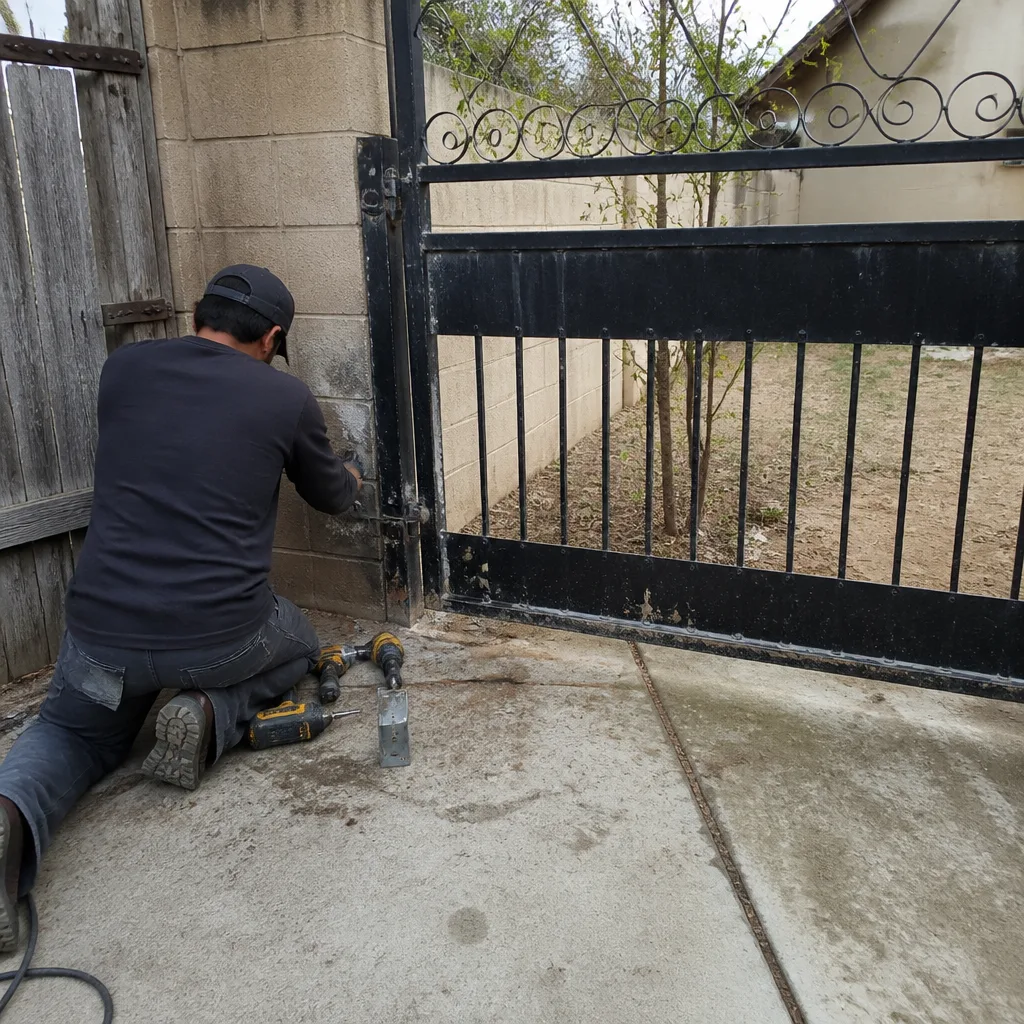 Before
 After
 Before
 After
 Before
 After