
Last updated October 30, 2026
 Wrought iron
 Wood & steel frame
 Farm & ranch
 Sliding driveway gates
 LiftMaster operators
Free on-site gate assessment - hinges, posts, and your LiftMaster or Nice gate operator checked before anything is quoted
The assessment is free and the quote is the invoice.
Get your free estimateSeasonal Gate Repair Care for Ontario: Year-Round Homeowner’s Guide
Ontario hit 113°F in summer 2021. That’s not an abstract weather stat for anyone with an automated gate. Inside a black steel operator housing in direct afternoon sun, ambient heat from a day like that pushes internal temperatures far beyond what most gate components are rated to handle. Gate operator capacitors are typically rated to 85°C internal temperature. A black metal housing on a 113°F day in Ontario can approach that threshold within weeks of summer, not years of accumulated wear. Seasonal gate care in this city is not optional maintenance. It’s the difference between an operator that lasts twelve years and one that fails on the hottest day of the year or the coldest night in January. Our Complete Gate Repair Guide for Ontario Homeowners covers exactly what to check, season by season, based on the specific climate conditions Ontario actually sees.
Styles & brands we work with
Quick Answer
Seasonal gate maintenance in Ontario, CA means checking heat buildup and track expansion in summer, clearing dust and testing limit switches after fall Santa Ana winds, testing battery backup capacity before winter cold reduces it by 20-30%, and inspecting posts for soil movement after winter rains. A consistent seasonal routine centered on these four climate-specific tasks prevents most gate failures before they happen.
Table of Contents
- Summer Gate Care: Heat, Sun and 105°F+ Days
- Fall Gate Prep: Santa Ana Wind and Dust Storms
- Winter Battery and Cold Weather Gate Maintenance
- Spring Gate Inspection: Soil Movement and Lubrication
- The Annual Task Most Homeowners Skip
- Brand-Specific Seasonal Notes: Ghost Controls, Elite and DoorKing
- Common Mistakes to Avoid
- When to Call a Professional
- Frequently Asked Questions
- The Bottom Line
Summer Gate Care: Heat, Sun and 105°F+ Days
Summer in Ontario is the hardest season on gate equipment, and the failure point is almost always heat. Not mechanical wear. Not age. Heat. When the ambient temperature climbs past 100°F, the interior of a gate operator housing in direct sun can exceed 150°F. Capacitors inside those housings are typically rated to 85°C, which is 185°F. You’d think that gives you margin. It doesn’t. Heat degrades capacitors cumulatively. Every hour spent near the rated limit shortens the component’s life. A summer of Ontario sun can age a capacitor by several years.
What to Check During Summer Months
- Operator housing temperature. Place your hand on the housing at 2 p.m. on a hot day. If it’s too hot to hold for more than a few seconds, the interior is running dangerously hot. Consider a shade structure or ventilation louvers.
- Track expansion on slide gates. Aluminum and steel track sections expand significantly at 110°F. A gate that ran smoothly in April may bind against the track in August. Listen for grinding or hesitation mid-travel.
- Capacitor failure signs. The gate starts slowly. The motor hums but doesn’t engage. The gate reverses mid-cycle. These are all early capacitor failure symptoms, and we see them most often in July and August.
- Photo eye alignment after heat creep. Sun-exposed sensor brackets soften and shift in extreme heat. A misaligned photo eye will stop the gate mid-cycle or prevent it from closing.
Shade and Ventilation: What Actually Works
Not every shade solution helps. A solid cover that blocks sun but traps hot air underneath makes the problem worse. What works is shade that allows airflow: a slatted cover, a canopy positioned twelve inches above the housing, or a ventilated enclosure modification. For slide gates on south-facing exposures in Ontario neighborhoods like Ontario Ranch or the areas north of the 10 freeway, afternoon sun is relentless. We have diagnosed operators in Ontario where the housing had been repainted dark brown by a previous owner. Dark paint on an operator housing is actively harmful in this climate. Light colors reflect heat. If your operator housing is dark, a repaint to white or light gray can lower internal temperatures by 10-15°F.
If you suspect heat-related failure, an electric gate repair technician can test capacitor health and internal housing temperature with an infrared probe. More on that in the Electric Gate Repair in Ontario guide.
Fall Gate Prep: Santa Ana Wind and Dust Storms
Fall in Ontario brings the Santa Ana winds, and those winds do two things to gate systems. They blast fine dust and sand into every opening, and they stress mechanical components with sustained gusting. The dust gets into limit switch housings, photo eye lenses, and control board enclosures. The wind itself pushes against large gates, testing hinges, welds, and post anchors that may have been marginal for years. A 40 mph gust against a 400-pound gate levered on an 8-foot arm generates enormous force at the hinge points.
Fall Gate Prep Checklist
- Clean photo eye lenses and reflectors. Dust film reduces signal strength. A gate that intermittently fails to close is often just a photo eye lens with a layer of Santa Ana dust on it. Wipe with a dry microfiber cloth.
- Check limit switch operation. Run the gate through a full open and close cycle. Listen for the motor straining at the end of travel. If the gate slams into the stop or the motor continues running briefly after the gate stops, the limit switch is out of adjustment.
- Test the manual release. Disconnect the operator and try moving the gate by hand. It should move smoothly through the full travel. If it binds, the gate itself has a mechanical problem the operator has been masking.
- Inspect hinge bolts and weld points. Look for cracks, rust lines, or loose fasteners. Santa Ana season will find the weak point. Better to find it on a calm October afternoon.
- Clear debris from the track and operator base. Leaves, sand, and palm fronds accumulate around the base of slide gate operators and block drainage. Standing water around the operator base leads to corrosion and control board damage.
Why the Manual Release Test Matters in Fall
The manual release is the emergency exit for your gate. If the operator fails and you can’t open the gate, the gate becomes a wall. In fall, before the wind season, we test the manual release on every service call. It’s a simple procedure but it catches neglected operators. If you can’t find your manual release key, or it’s seized, that’s a problem to solve before you need it. Some operators made by Ghost Controls and Elite have release mechanisms that are easy to operate when maintained but seize solid after a year of dust and weather. Test yours now.
Winter Battery and Cold Weather Gate Maintenance
Ontario winters are mild compared to the rest of the country, but they still matter for gate systems. Overnight lows dip into the 30s. A cold snap drops temps below freezing for a few hours. For a gate operator calibrated in 90°F summer weather, a January morning at 34°F is a legitimate stress test. The component most affected is the battery backup system.
Most residential gate operators use 12V sealed lead-acid or gel batteries for backup power. Those batteries lose 20-30% of their capacity below 40°F. That’s chemistry, not quality. A battery that held the gate through a 6-hour power outage in July might last only 3 hours in January. If the battery was already degraded to 50% of its original capacity, a cold snap can expose a total backup failure. The gate fails when grid power drops, and you’re locked out or locked in.
How to Test Battery Backup Before Winter
- Locate the battery. In most residential operators, it’s inside the operator housing or in a separate battery box mounted nearby.
- Check the date code. Sealed lead-acid and gel batteries have a service life of 3-5 years. If yours is past that, replace it proactively.
- Run a simulated outage test. Shut off the breaker to the operator. Open and close the gate using the backup system. Count the cycles. A healthy battery should cycle the gate at least 5-10 times. If the gate is sluggish after 2-3 cycles, the battery is degraded.
- Inspect battery terminals for corrosion. White or green crust on the terminals adds resistance and drains power. Clean with a wire brush and a protective terminal spray.
Cold Snap Effects on Other Components
It’s not just the battery. Cold thickens the grease in wheel bearings and hinge pins. The result is a gate that moves stiffly, drawing more current from the operator. Limit switches can shift as materials contract. Photoelectric sensors fog on cold mornings, causing phantom obstruction detections. None of these are catastrophic by themselves, but they stack. A cold-stiff gate plus a weak battery plus a fogged photo eye equals a gate that fails exactly when you need it.
For a full breakdown of what’s involved in diagnosing these systems, read our Gate Repair in Ontario page.
Spring Gate Inspection: Soil Movement and Lubrication
Ontario gets most of its rain between November and March. Not a lot by national standards, but enough to move soil. Clay-heavy soils in the Inland Empire expand when wet and shrink when dry. A gate post set in clay soil can shift by a quarter inch over one winter. A quarter inch at the post is several inches of sag at the far end of a 16-foot gate. That sag changes how the gate rides on its track, how it engages the operator, and how the latch aligns.
Spring is the most important gate inspection season on the calendar because winter damage shows up in spring. The operator has been fighting soil movement for months. Symptoms show up as the weather warms and the gate starts its first real usage cycle since fall.
Spring Gate Inspection Protocol
- Check post plumb. Use a 4-foot level against both gate posts. A drift of more than half a bubble means the post has moved. If the post is set in concrete and the concrete has cracked, the fix is excavation and reset. Ignoring it means the gate will bind increasingly as the season progresses.
- Check gate level. Measure the gap between the bottom of the gate and the ground at both ends. Uneven gaps mean sag or post movement. Clicking or popping sounds during travel confirm it.
- Inspect the track for deformation. Winter moisture plus spring heat can warp track sections. Look for bends, kinks, or lifted sections at the joins.
- Lubricate all moving points. Ontario’s winter air is dry, and dry air strips light lubricants from chains, hinges, and roller bearings. Use a spray lithium grease or silicone-based lubricant on hinge pins, roller assemblies, and chain drives. Do not use WD-40 as a lubricant. It is a water displacer and solvent, not a lasting lubricant for load-bearing gate components.
- Clean and dress electrical connections. Winter moisture causes terminal corrosion. Inspect all wire connections at the operator and at the photo eyes. Tighten loose terminals and clean green or white corrosion.
- Test the full safety system. Block the gate with an obstruction and verify it reverses. This is also the best time of year to do the measured entrapment test described in the next section.
The Annual Task Most Homeowners Skip
Every gate operator sold in the US since 2016 is required to have entrapment protection: a system that detects an obstruction and reverses the gate before applying enough force to injure someone. The most common types are photoelectric eyes and inherent obstruction sensing built into the operator. Most homeowners know the photo eyes exist. Almost none test the full system the way a technician does. And we mean the measured test.
The proper entrapment protection test uses a measured obstruction object: typically a cylinder 2 inches in diameter and 4 inches long, or a block 4x4x12 inches, placed at predetermined points along the gate path. The gate must detect the object and reverse during both opening and closing. The test is performed at multiple heights and along the entire length of travel. There are about a dozen specific test positions in the official UL 325 protocol. We’ve never met a single homeowner who does this test annually. Not once, across hundreds of service calls in Ontario.
The Problem with Skipping This Test
Entrapment sensors fail silently. A photo eye with a weak emitter might still allow the gate to operate normally. The gate opens, closes, and appears fine. But it will not detect a child or pet in the path until the force is already applied. Operator reversal force settings drift over time. A gate that reversed with 40 pounds of force when installed might be applying 70 pounds a year later, which is outside the safe range. The only way to know is to test with an actual obstruction and a force gauge.
This is the one test we recommend every Ontario homeowner either learn to do properly or hire out. if you’re not confident doing it yourself, a gate specialist can run the full UL 325 compliance check in about 30 minutes.
Brand-Specific Seasonal Notes: Ghost Controls, Elite and DoorKing
Different operators fail differently by season, and brand matters. At Ontario Gate Company home, we diagnose on-site based on the operator’s specific component layout. Some seasonal notes from field experience:
- Ghost Controls residential swing operators are popular in Ontario for their DIY-friendly installation, but their sealed gearboxes run hot in summer. If you have a Ghost Controls operator on a south-facing post, check the housing temperature in the afternoon. The brand’s control board is vulnerable to heat-gun-level thermal stress if the housing is unshaded. A white cover makes a measurable difference.
- Elite slide gate operators used on commercial and larger residential properties in Ontario have robust limit switches, but the limit cams ride on a shaft that expands and contracts with temperature. A gate that stops correctly at 70°F may over-travel at 105°F. This is the single most common cause of Elite operator faults we see in summer: limit drift from thermal expansion.
- DoorKing operators have a reputation for durability in commercial settings, but their battery trays are prone to corrosion in our winter damp-dry cycles. The battery sits in a steel tray inside the housing, and if the housing gasket has hardened, winter moisture gets in, rusts the tray, and eats the battery terminals. Check yours in December, before the January cold.
The point is not that one brand is better than another. The point is that each brand has seasonal failure patterns, and knowing your brand’s pattern means catching the problem before it strands your gate. See Choosing the Right Gate Repair Brand: A Buyer’s Guide for Ontario for details on specific manufacturers.
Common Mistakes to Avoid
- Lubricating with WD-40. It’s a solvent. It strips grease and leaves surfaces nearly dry. Use silicone spray or lithium grease on gate components. We find more neglected gates ruined by wrong lubricant than by no lubricant.
- Painting the operator housing dark. A black or dark brown housing in Ontario’s summer sun absorbs heat. The operator inside cooks. Light colors are functional, not aesthetic.
- Ignoring a gate that’s slightly slower than before. A slide gate that takes 15 seconds to open instead of 12 seconds is telling you something. The operator is drawing more current, the track is binding, or the capacitor is failing. Every month you wait makes the repair bigger.
- Testing the manual release only when the power is out. That’s the worst possible time to discover the release is seized. Test it seasonally, as this guide recommends for fall.
- Assuming the photo eyes are working because the gate operates. The gate can operate normally with degraded photo eyes. They only matter when someone is in the path. Test with an actual obstruction.
- Waiting until a failure to replace the battery. Battery backup fails silently. The first time you notice it’s dead is during a power outage. Replace on the date code schedule, not when it fails.
- Skipping the spring post check because the gate still opens. Post movement shows up gradually. By the time the gate binds hard enough to stop, the post may be moved far enough that resetting is the only fix. Catching it early means shimming or minor adjustment.
When to Call a Professional
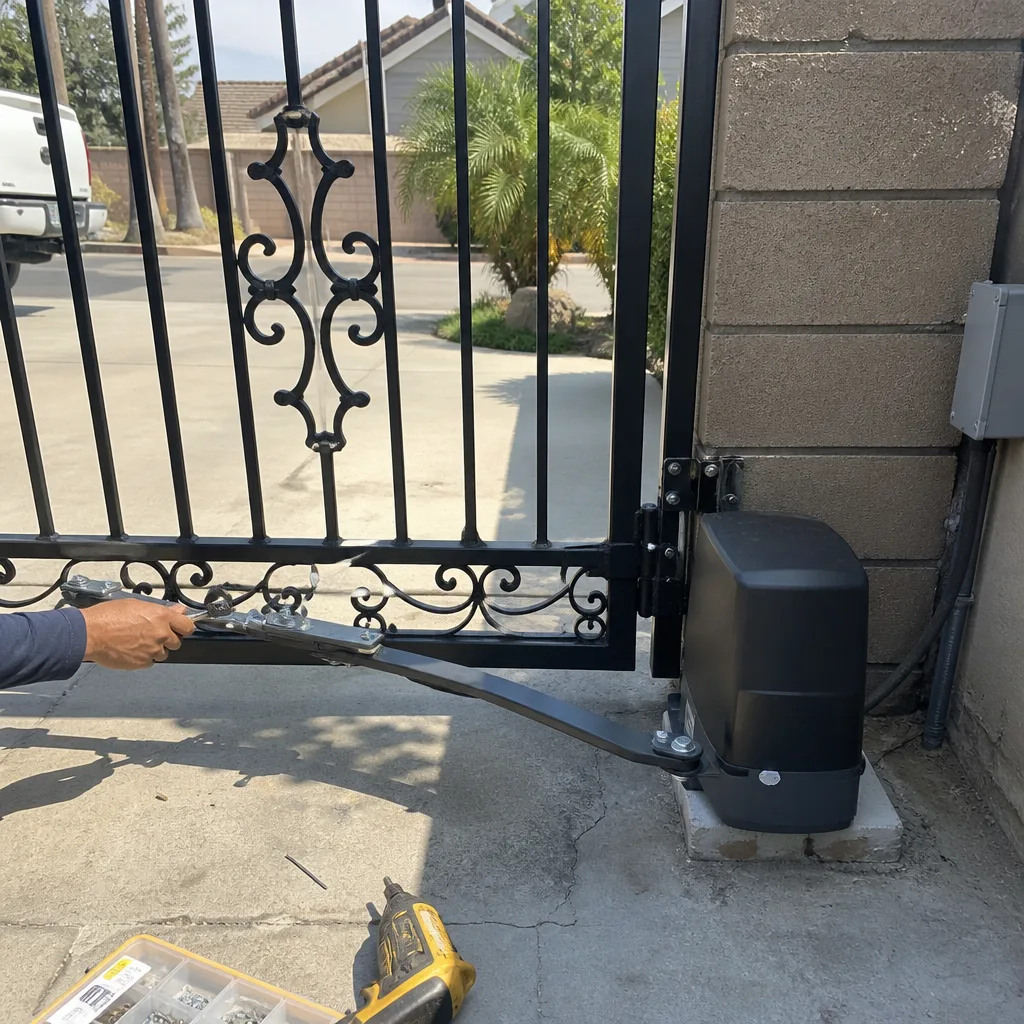
Some gate issues are safe and reasonable for a homeowner to address: lubricating hinges, cleaning photo eyes, testing the manual release from the non-operational side. Others are not. If your gate operator fails to reverse on an obstruction, that’s a safety liability that requires testing equipment to diagnose. If the gate binds and the operator hums, continuing to run it will burn out the motor. If the post is visibly out of plumb, the fix involves structural excavation and re-setting, not shims and hope. If you have a Ghost Controls, Elite, DoorKing or Mighty Mule operator that’s faulting intermittently, the problem is likely in the control board or the limit system, and guessing wrong means buying parts you didn’t need. Ontario Gate Company offers free estimates in Ontario and the surrounding Inland Empire. Call (855) 707-3634 for a diagnosis.
For new Gate Installation in Ontario, we handle the full lifecycle from site assessment to final safety testing.
Frequently Asked Questions
Seasonally. Four times per year, tied to the climate patterns described in this guide. Summer is heat and track check, fall is wind and dust prep, winter is battery testing, and spring is soil movement and full safety inspection. A gate that gets four focused checks per year will almost always outlast one that gets reactive repairs only.
Yes, and the damage accumulates silently. Capacitors degrade faster at sustained high temperatures. Heat causes aluminum track to expand and bind. Dark operator housings absorb heat and push internal temperatures toward component limits. Ontario’s 100°F+ summer days are the single biggest factor in premature operator failure in this area.
Turn off the breaker to the gate operator, then open and close the gate several times using only the battery. A healthy battery should cycle the gate at least 5-10 times. If the gate moves slowly or stops after 2-3 cycles, the battery is degraded and should be replaced before the coldest weather arrives.
Post plumb check, gate level check, hinge and roller inspection, lubrication of all moving points, limit switch verification, photo eye cleaning and alignment, manual release test, battery test, terminal and connection inspection, and a full entrapment protection test. A complete inspection takes about 45 minutes.
We service the major operators found in Ontario: LiftMaster, FAAC, BFT, Linear, Viking, Ghost Controls, DoorKing, Elite, and Mighty Mule. Our technicians are trained on each manufacturer’s failure points and configuration quirks, so diagnosis happens faster and avoids unnecessary parts replacement.
A seasonal inspection call typically costs between $85 and $150 depending on the gate type and access complexity. The cost of replacing a capacitor or limit switch during an inspection is typically far lower than the cost of replacing a burned-out motor after a heat-failure event. Ontario Gate Company quotes every repair price before any work begins. Call (855) 707-3634 for an exact quote.
The Bottom Line
Ontario’s climate punishes gate systems in specific, predictable ways. Summer heat kills capacitors. Santa Ana winds choke sensors and shift limits. Winter cold exposes battery weakness. Spring soil movement undoes post alignments. A gate that receives seasonal attention tied to these four patterns will last longer, fail less often, and protect your property more reliably. The key is consistency: four checks per year, each with a specific checklist, done before the season’s worst conditions arrive rather than after they’ve done the damage. If you want a specialist to run the full seasonal protocol on your gate, our Gate Repair services are one phone call away.
For help with any seasonal gate issue in Ontario, call (855) 707-3634 for a free estimate. We diagnose on-site and quote before any work starts.
Written by the team at Ontario Gate Company, serving Ontario since 2011. Find more guides & resources on our blog.
See the difference
 Before
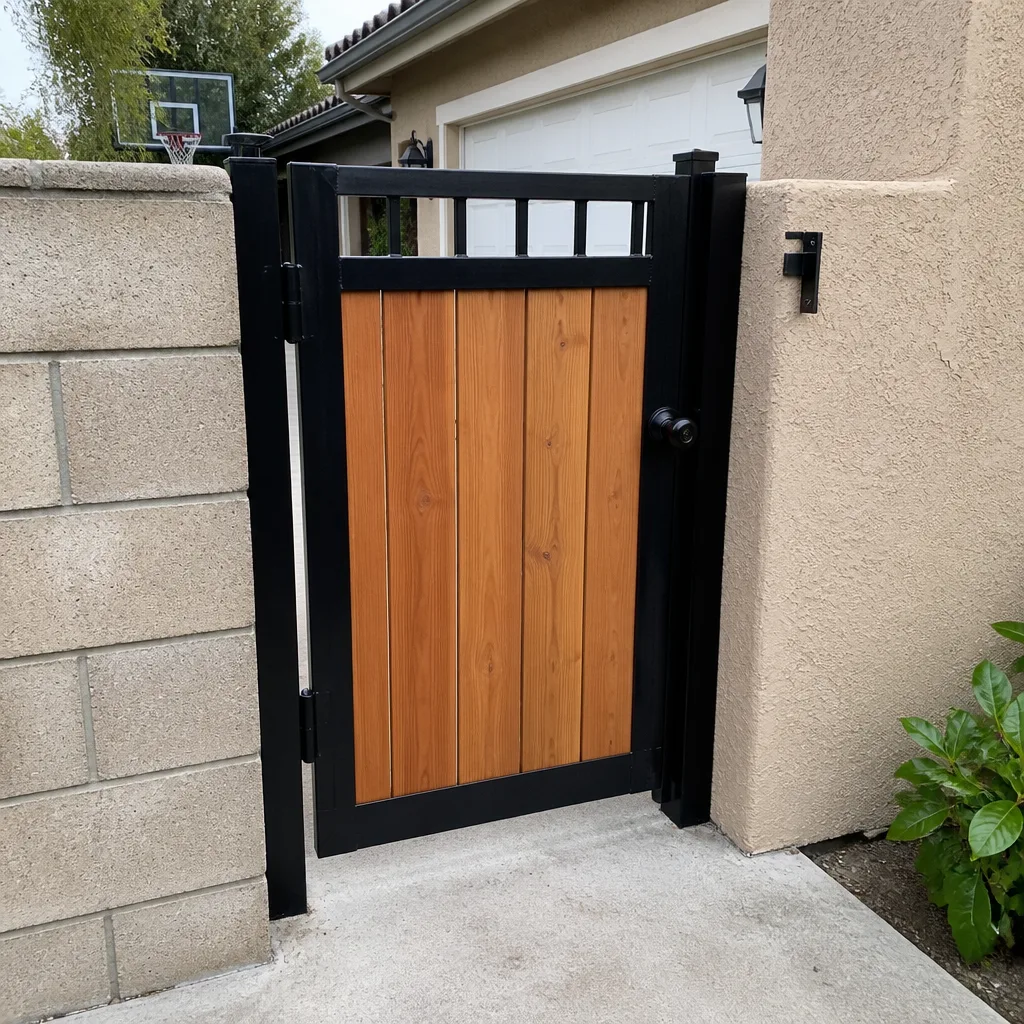 After
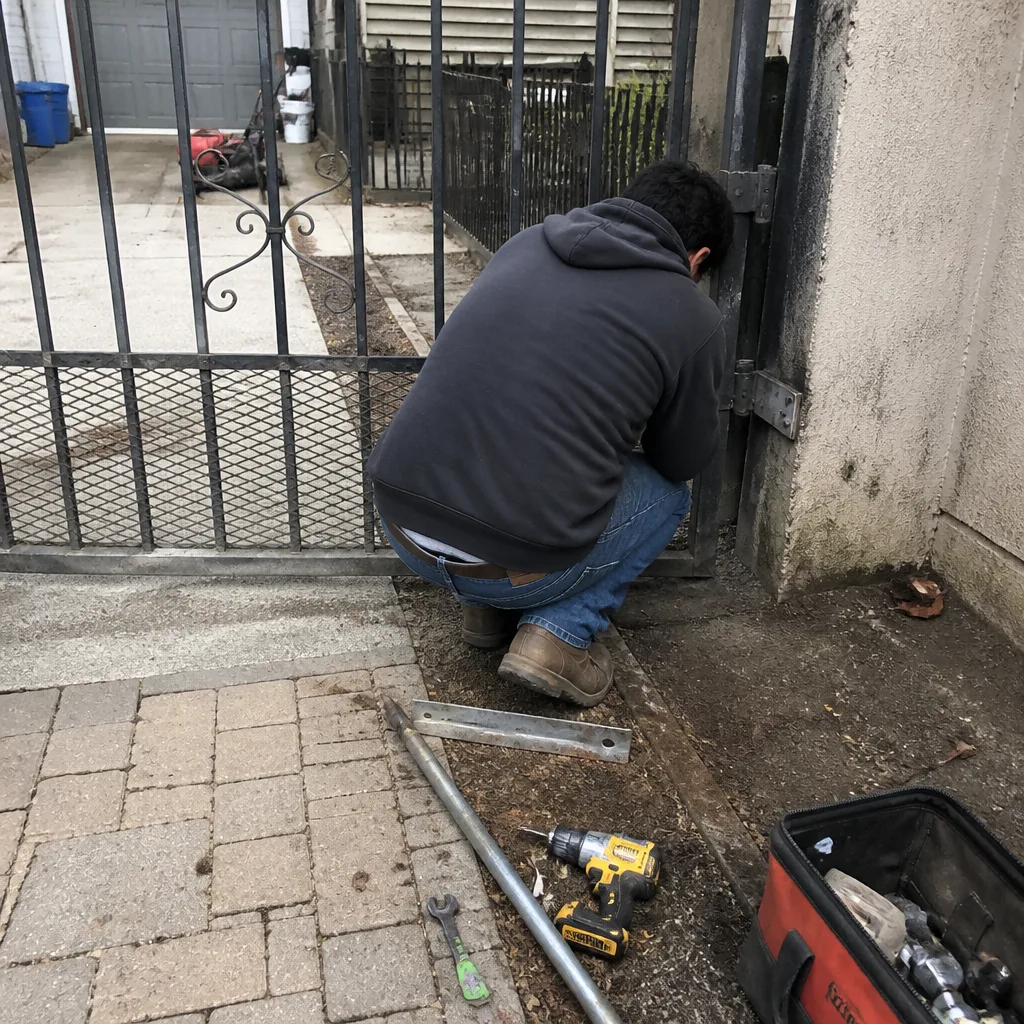 Before
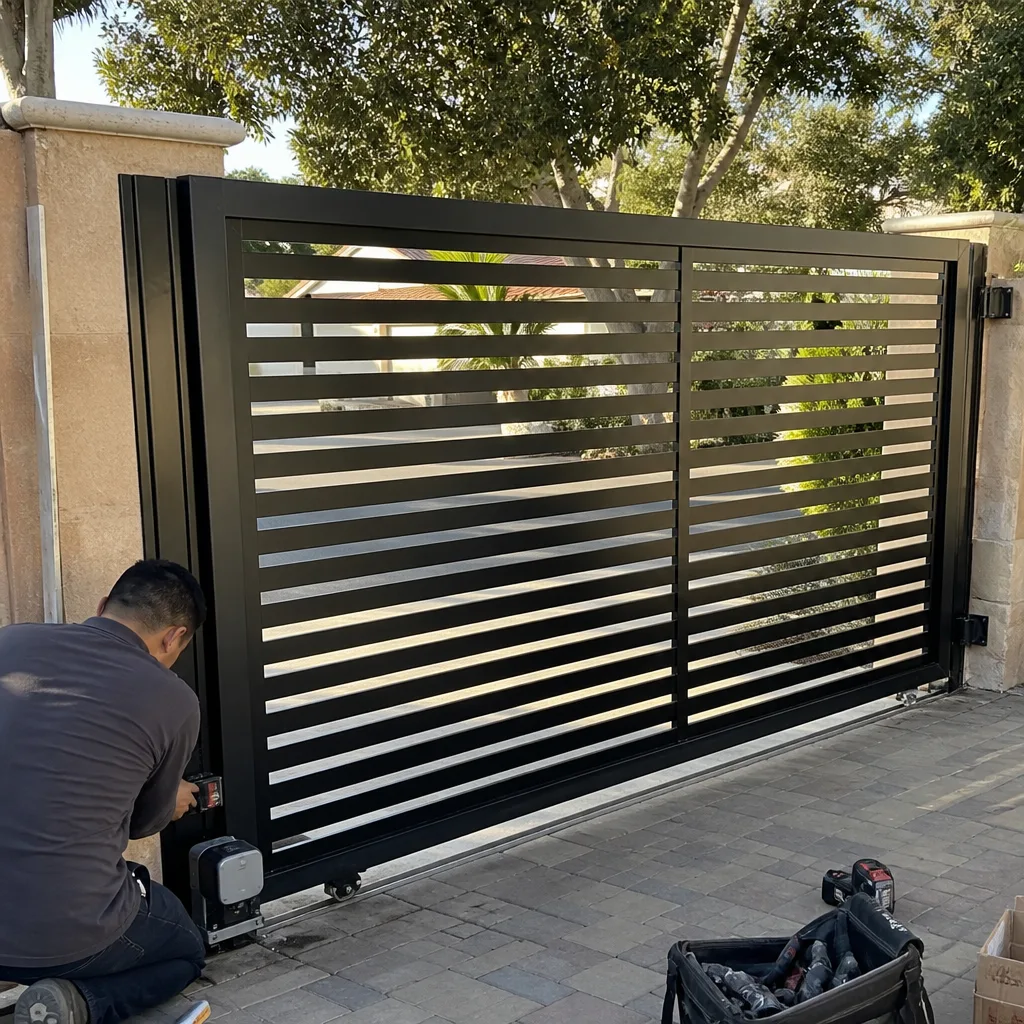 After
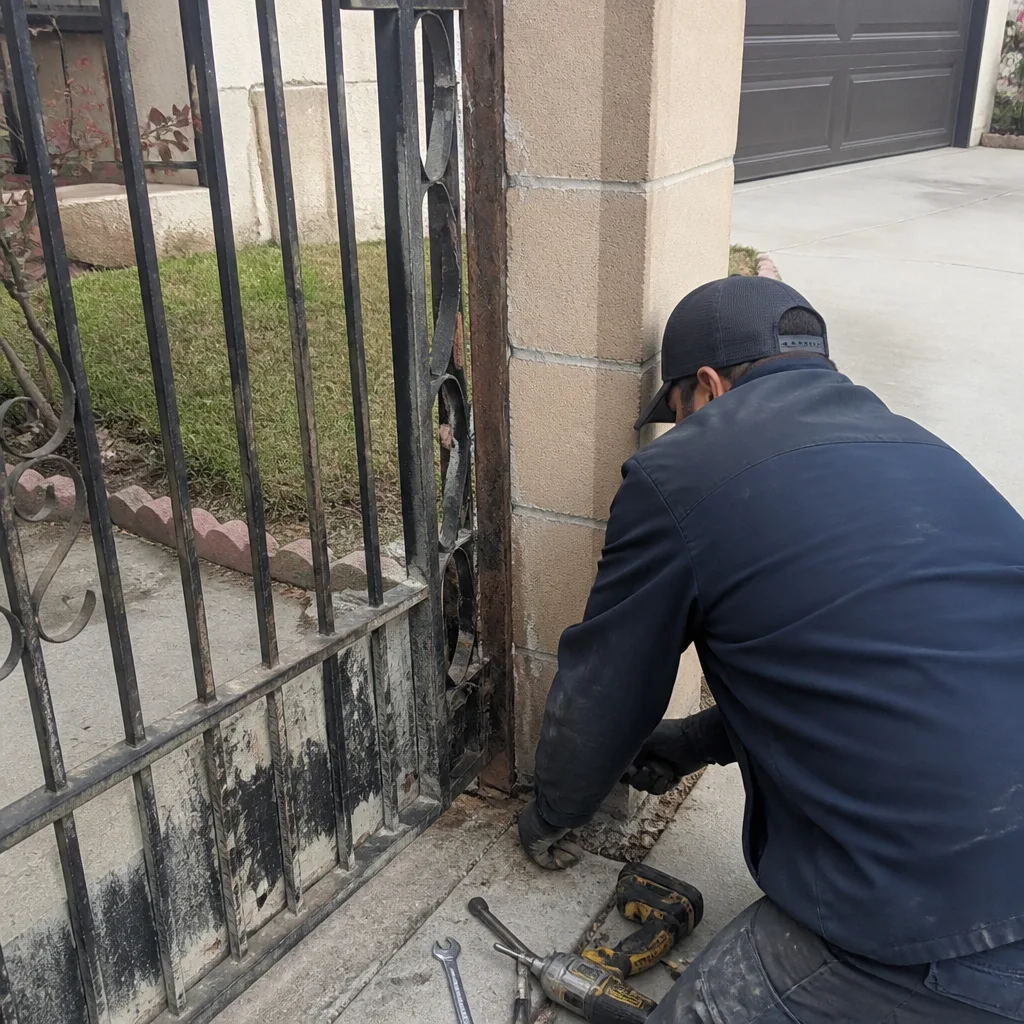 Before
 After